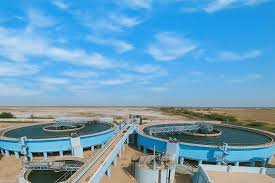
Dholera, November 4, 2026: Dholera is getting a giant water bank. A 220 crore litre raw water reservoir, costing ₹438.74 crore, is lined up for the Dholera Special Investment Region (SIR). The news came out on November 3, 2026. For anyone tracking Dholera investment, this matters more than another flashy announcement. Water is the one thing a factory town cannot fake.
Think of it this way. Roads bring companies to the gate. Power keeps the lights on. But water decides whether they stay. So this reservoir is not a side project. It is plumbing for the whole Dholera investment story.
Key takeaways
- What: A raw water reservoir with 220 crore litres (2,200 million litres) of storage for Dholera SIR.
- Cost: ₹438.74 crore.
- Scale: Roughly 2.2 million cubic metres, or about 880 Olympic-size swimming pools.
- Why it matters: Assured water is a basic condition for semiconductor, data centre and heavy industry projects, the backbone of Dholera investment.
- Still awaited: Exact site, executing agency and completion date.
What Is the Dholera Raw Water Reservoir?
The Dholera raw water reservoir is a ₹438.74 crore storage facility that will hold 220 crore litres of untreated water for Dholera SIR. Raw water is water before it is treated. It gets stored first, then sent to a treatment plant, and finally supplied to homes and industries.
In simple words, it is a buffer. When supply from the source dips, the reservoir keeps the taps running. When demand jumps, it absorbs the shock. For a city being built for factories, that buffer is non-negotiable.
Dholera SIR is a planned greenfield city in Ahmedabad district, along the Gulf of Khambhat. According to the official Dholera SIR website, its sanctioned development plan covers 920 square kilometres. That is a lot of land to keep supplied.
The Numbers, Decoded
Big numbers can blur together. So here is what 220 crore litres actually means.
| Metric | Figure |
|---|---|
| Storage capacity | 220 crore litres |
| Same in million litres | 2,200 million litres (ML) |
| Same in cubic metres | About 2.2 million cubic metres |
| Project cost | ₹438.74 crore |
| Cost per litre of storage | About ₹2 per litre of capacity |
| Olympic pool equivalent | About 880 pools (at 2.5 ML each) |
| Days of feed for a 50 MLD plant | About 44 days, if full and with zero inflow |
The last row is the interesting one. Dholera’s existing water treatment plant in the Activation Area is a 50 MLD (million litres per day) unit. A full 2,200 ML reservoir could feed that plant for around six weeks, even if the source stopped completely. That is our own calculation, not an official claim. Still, it shows the kind of safety margin investors look for.
Why Water Decides Dholera Investment
Here is the uncomfortable truth. The Bhal region around Dholera has long been one of Gujarat’s drier, saline belts. Researchers have flagged it as water-scarce for years. Early planning debates even questioned where the city’s water would come from at all.
Planners looked at several options over the past decade. These included the Narmada canal network, the Pariyej and Kaneval reservoirs, desalination and the long-discussed Kalpasar project. Each option had a catch. Some water was already allocated elsewhere. Others were costly or years away.
That history is exactly why this reservoir is big news for Dholera investment. It signals a shift from “where will the water come from?” to “how much can we store?” That is a more mature question. And mature questions attract serious money.
What industries actually need
Different investors care about water for different reasons:
- Semiconductor fabs use huge volumes of ultra-pure water for wafer cleaning. Any interruption can scrap entire batches.
- Data centres often rely on water-based cooling. Downtime here costs crores per hour.
- Chemicals, pharma and engineering need steady process water to run shifts without breaks.
- Housing and townships need reliable drinking water before families will move in.
In every case, the first question in a site visit is the same. Is the water guaranteed? A 220 crore litre reservoir gives Dholera a far stronger answer.
How the Reservoir Fits Dholera’s Existing Water System
Dholera already has a working water network in its Activation Area. The new reservoir adds storage at a scale the current system simply does not have.
Here is how the existing setup works, based on project details published for Dholera SIR:
- Source: Raw water is drawn from the Pariyej reservoir.
- Pumping: A 10 MLD raw water pumping station and transmission main carries it from the Pipli Pumping Station to the treatment plant at Town Planning Scheme 1 (TP1).
- Treatment: A 50 MLD water treatment plant cleans the water.
- Storage: A 16.7 ML clear water reservoir and a 10 ML master balancing reservoir hold treated water.
- Supply: Elevated service reservoirs and pipelines take it to users.
Now compare the numbers. The master balancing reservoir holds 10 ML. The new raw water reservoir will hold 2,200 ML. That is roughly 220 times more. In other words, Dholera moves from storing a few hours of water to storing weeks of it.
The Gujarat Infrastructure Development Board has also listed studies on raw water transmission from the Pariyej–Kaneval reservoirs for Dholera SIR. This suggests the region’s water plan is being built in layers, not as a single pipe.
Recycling is part of the plan too
Dholera was designed with a recycled water network from the start. Treated wastewater is meant to serve non-drinking uses like gardening, cooling and industrial processes. As a result, fresh water can be saved for drinking and high-purity needs. A large raw water reservoir pairs well with this approach. Storage covers the base. Recycling stretches every litre further.
Who Is Building Dholera?
Dholera SIR is developed by Dholera Industrial City Development Limited (DICDL). It is a special purpose vehicle formed on January 28, 2016. The Dholera SIR official site lists its ownership as follows:
- 51% held by the Government of Gujarat through the Dholera Special Investment Regional Development Authority (DSIRDA).
- 49% held by the Government of India through the National Industrial Corridor Development and Implementation Trust (NICDIT).
Dholera is part of the Delhi–Mumbai Industrial Corridor. That central-state partnership is important for Dholera investment. It means trunk infrastructure like water, roads and power is backed by both governments, not a single private developer.
The executing agency for the new reservoir has not been confirmed in the details available so far. Amdavad Gully will update this story as the site, contractor and timeline become public.
Dholera Investment: The Bigger Picture in 2026
The reservoir does not stand alone. It lands in a year packed with Dholera milestones. Here is the wider stack that is shaping Dholera investment right now.
1. Semiconductors
Tata’s semiconductor fab is the anchor tenant everyone talks about. In mid-October 2026, Chief Minister Bhupendra Patel visited Dholera and reviewed the plant along with civic projects in the Activation Area. Fabs are among the thirstiest industries on earth. So a reservoir of this size directly supports Dholera’s chip ambitions.
2. Data centres
In July 2026, Gujarat’s Data Centre Policy 2026–29 named Dholera as its primary hub. Officials have talked about potential capacity of 7 to 8 gigawatts and investment of ₹6–7 lakh crore. Data centres need land, power and cooling. Water storage ticks the third box.
3. Roads and expressway
The 109 km Ahmedabad–Dholera Greenfield Expressway opened for public use in 2026. Travel time from Ahmedabad has dropped sharply. For Amdavadis, Dholera now feels like a long commute rather than a distant dream.
4. Airport
Dholera International Airport’s first phase was cleared by the Union Cabinet in 2022 at an estimated ₹1,305 crore. Operations are targeted around the end of 2026. Air cargo matters for high-value goods like chips and electronics.
5. Rail
In May 2026, the Union Cabinet approved the Ahmedabad (Sarkhej)–Dholera semi high-speed double line, a project worth about ₹20,667 crore. It will link Ahmedabad, Dholera SIR, the upcoming airport and the Lothal maritime heritage complex.
Put together, these projects show a pattern. Connectivity came first. Now utilities like water are catching up. That sequence is exactly what long-term Dholera investment needs.
What This Means for Investors and Land Buyers
Whenever Dholera makes headlines, plot sellers get busy. So let’s be clear about what this reservoir does and does not mean.
What it does mean
- Lower risk for industry: Assured water storage reduces one of Dholera’s biggest historic concerns.
- Stronger case for anchor tenants: Fabs and data centres can plan with more confidence.
- Jobs and housing demand: If industries scale up, workers will need homes, schools and markets nearby.
What it does not mean
- Not an overnight price jump: Infrastructure takes years to build and even longer to fill with people.
- Not a guarantee for every plot: Land outside planned town planning schemes may never get piped water soon.
- Not proof of any seller’s claims: A government project does not validate a private developer’s brochure.
Before you put money into Dholera
Fraud cases involving plots sold in Dholera’s name have surfaced in the past, including outside Gujarat. Therefore, a few checks are essential before any Dholera investment:
- Confirm the plot falls inside an approved town planning scheme of Dholera SIR.
- Check land records and zoning with DSIRDA, not just with the seller.
- Ask for clear title, non-agricultural permission and the final plot number.
- Be wary of “guaranteed returns” or pressure to book immediately.
- Get an independent lawyer to review every document.
Infrastructure news is a good reason to research. It is never a good reason to rush.
What We Still Don’t Know
Good reporting means flagging the gaps. As of November 4, 2026, these details are yet to be made public in what we have seen:
- The exact location of the reservoir within or near Dholera SIR.
- Which agency or contractor will build it.
- The construction timeline and completion date.
- The source that will fill it, and at what daily rate.
- How its water will be split between industrial and domestic users.
These answers will shape how much the reservoir moves the needle on Dholera investment. We will track them as they come.
Why Amdavad Should Care
Dholera is about 100 km from Ahmedabad. Yet its success will ripple straight back into the city. Ahmedabad’s engineers, suppliers, transporters and real estate players are all part of the Dholera supply chain. New factories there mean new contracts here.
Moreover, Dholera’s water planning can teach Amdavad a thing or two. Storage, recycling and planned supply are lessons every growing city needs. As Ahmedabad expands east and west, the same questions will hit closer to home.
Frequently Asked Questions
What is the capacity of the new Dholera raw water reservoir?
The Dholera raw water reservoir will have a storage capacity of 220 crore litres. That equals 2,200 million litres, or about 2.2 million cubic metres.
How much will the Dholera reservoir cost?
The reservoir is estimated to cost ₹438.74 crore. That works out to roughly ₹2 per litre of storage capacity.
Why is the reservoir important for Dholera investment?
Assured water is a basic requirement for semiconductor fabs, data centres and heavy industry. The reservoir reduces water-supply risk, which strengthens the long-term case for Dholera investment.
Where does Dholera SIR currently get its water?
Dholera’s Activation Area draws raw water from the Pariyej reservoir through a pumping station at Pipli. It is treated at a 50 MLD water treatment plant in Town Planning Scheme 1.
Who develops Dholera SIR?
Dholera Industrial City Development Limited (DICDL) develops Dholera SIR. It is a joint venture with 51% held by the Gujarat government through DSIRDA and 49% by the Government of India through NICDIT.
Is now a good time to invest in Dholera land?
Infrastructure like this reservoir improves Dholera’s fundamentals, but it does not guarantee returns on any single plot. Buyers should verify that land sits inside an approved town planning scheme and check records with DSIRDA before investing.
The Bottom Line
Dholera has spent years selling a vision. Now it is quietly building the boring stuff that makes visions real. A 220 crore litre raw water reservoir at ₹438.74 crore is exactly that kind of boring. And boring infrastructure is what serious Dholera investment runs on.
Roads got companies interested. Water may be what makes them stay.
Stay tuned to Amdavad Gully for updates on the Dholera reservoir and every big move shaping the Ahmedabad region.