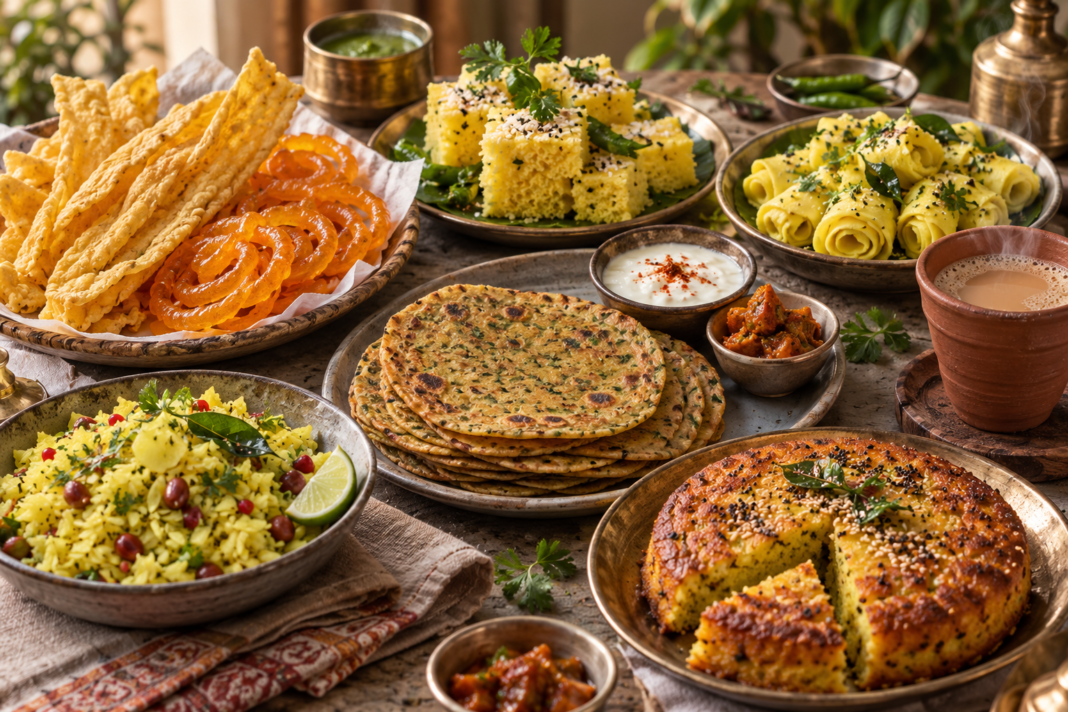
Best Breakfast Places in Ahmedabad: 10 Spots, and What to Actually Order
Ahmedabad eats breakfast the way other cities eat dinner.
By 7:30 on a Sunday morning there are queues outside shops that have been frying the same thing for a century. Men in kurtas are standing on the pavement with paper plates, eating hot jalebi and crisp fafda in the same mouthful, chased with a paper cup of thin kadhi. Nobody is in a hurry, and everybody has an opinion about which shop does it better.
This is not a light meal. Gujarati breakfast is deep-fried, gram-flour-based, sweet and savoury simultaneously, and completely unlike anything you’ll be served in a hotel buffet.
This guide covers ten places across every price point — from a ₹60 plate at a hundred-year-old teahouse to a hotel spread — plus the part nobody bothers with: what the dishes actually are, the difference between khaman and dhokla, and why most of the good stuff is gone by 11 am.
Quick reference
| Place | Area | Rough cost/head | Best for |
|---|---|---|---|
| Chandravilas | Gandhi Road | ₹100–250 | The classic, all-day breakfast thali |
| The Green House | Lal Darwaja | ₹400–700 | Heritage garden setting |
| Das Khaman | Ambawadi + outlets | ₹80–200 | Khaman, khandvi, farsan |
| Oshwal | Multiple outlets | ₹100–250 | Fafda-jalebi, takeaway packs |
| Fafda House | City | ₹80–200 | Pure fafda-jalebi |
| Lucky Tea Stall | Lal Darwaja | ₹60–150 | Bun maska and chai |
| Kovallam | City | ₹200–400 | South Indian, Chettinad |
| The AUDA Garden wagon | Near Udgam School | Under ₹100 | Cheap South Indian, sells out |
| Zen Cafe / The Mad House | Navrangpura / Gulbai Tekra | ₹300–600 | Cafe and continental |
| Café Piano / The Eatery | TGB / Sheraton | ₹700–1,200 | Buffet, business breakfast |
First: what is a Gujarati breakfast, actually?
Skip this if you grew up here. Read it if you didn’t, because the menu boards assume you already know.
Fafda — Long, flat, crisp strips of seasoned gram flour, deep-fried. Never eaten alone. The standard plate is fafda plus papaya sambharo (a warm grated raw-papaya relish), fried green chillies, and a small bowl of thin kadhi for dipping.
Jalebi — Fried in desi ghee at the good shops, and dunked in syrup only after you order, so it arrives hot and still crisp. Eaten with the fafda, in the same mouthful, not as dessert afterwards. The sweet-salty-sour collision is the entire point.
Gathiya — Fafda’s thicker, softer cousin. Vanela, tikha, phulvadi — several regional variants.
Khaman vs dhokla — the thing everyone gets wrong
These are not the same food, and Amdavadis will correct you.
Khaman is made from gram flour (besan). It’s yellow, soft, spongy, faintly sweet, and finished with a tempering of mustard seeds, green chillies and curry leaves, usually with coriander and grated coconut. Nylon khaman is the extra-soft, extra-airy version.
Dhokla is made from a fermented batter of rice and chana dal. It’s paler, denser, more sour, and less sweet.
If someone hands you something bright yellow and spongy, that’s khaman. Most of India calls it dhokla. Most of India is wrong.
Other things you’ll see on a morning menu:
- Khandvi — thin gram-flour sheets rolled into delicate spirals, tempered
- Sev khamani — crumbled khaman with sev, onion and coriander
- Poha — with sev and pomegranate, the everyday weekday breakfast
- Bataka vada / dal vada — fried, hot, best from a cart
- Methi na gota — fenugreek fritters, a monsoon speciality
- Patra — spiced colocasia leaf rolls, steamed then tempered
- Thepla — soft methi flatbread, the travel food of every Gujarati family
- Sev usal — spicy white-pea curry topped with sev
- Khichu — steamed rice-flour dough with oil and chilli, mostly a winter street item
Timing rule: fafda is traditionally a morning food. Most serious shops sell out or stop frying by late morning. Go before 10 am. By noon you’re eating leftovers.
The 10
1. Chandravilas, Gandhi Road — the institution
Where: Gandhi Road, old city, near Lal Darwaja Cost: roughly ₹100–250 a head
A humble old teahouse that has never tried to be anything else, and the single best crash course in Gujarati breakfast available anywhere.
The jalebi is the tell. Every batch is fried fresh in desi ghee and only dropped into syrup once an order comes in — which is why it arrives hot, crisp and structurally intact rather than soggy. It comes with fafda, grated papaya salad and kadhi.
If you don’t know what to order, order the all-day breakfast thali. It gives you a sensible portion of everything: khaman tempered with green chillies and mustard seeds, poori-shak, chana, bataka vada, methi na gota, patra, and jalebi-fafda.
Do this: finish the heritage walk at Jama Masjid around 10:30 am and come straight here. The walk ends hungry, this is minutes away, and the combination is the best food-and-history morning in the city.
Verdict: if you eat one Gujarati breakfast in your life, eat it here.
2. The Green House, House of MG — breakfast in a courtyard
Where: House of MG, opposite the Sidi Saiyyed Mosque, Lal Darwaja Cost: roughly ₹400–700 a head
The garden-courtyard restaurant at the House of MG heritage hotel, and the most pleasant place in Ahmedabad to eat breakfast slowly.
The menu runs both ways — a traditional Gujarati breakfast spread with fafda, jalebi, dhokla and poha, alongside continental options — plus a serious tea list with leaves sourced from specific estates.
Who it’s for: business breakfasts, visitors on their first morning, and anyone who wants old-city atmosphere without standing on a pavement. It’s the polished version of what Chandravilas does raw.
Verdict: worth the premium for the setting. Sit outside.
3. Das Khaman — since 1922
Where: Nehru Nagar Circle, Ambawadi, plus eight or more outlets across the city Cost: roughly ₹80–200 a head
A hundred years of doing one category properly. Das Khaman is what Amdavadis think of first when they think of farsan, and the consistency across outlets is the achievement.
Order: vati dal na khaman, sev khamani, tam tam khaman, sandwich dhokla, khandvi, and the kachori. The plain khaman is the benchmark — order it before you order anything clever.
Verdict: the best khaman in the city, and the easiest quality breakfast to reach from almost anywhere in Ahmedabad.
4. Oshwal — fafda-jalebi and the travel pack
Where: multiple outlets Cost: roughly ₹100–250 a head
Solid, fast, reliable Gujarati breakfast — fafda, jalebi, khaman, dhokla — and known for one genuinely clever product.
The Fafda Travel Pack pairs crisp fafda with dry kadhi powder in packaging designed to hold for around six months, made in pure groundnut oil with no preservatives. If you’ve ever wanted to take Gujarati breakfast home to someone in another city, this solves a problem nobody else has.
Also order: Amdavadi nylon khaman, the cheese chilli garlic toast (not traditional, extremely popular), and a lassi.
Warning: the queues at Dussehra are legendary. More on that below.
Verdict: best for takeaway and for gifts. Perfectly good to eat in.
5. Fafda House — single-minded
Where: city Cost: roughly ₹80–200 a head
A shop that does one thing. Fafda-jalebi, done properly, with local dairy products sold alongside.
During Dussehra and Navratri, expect a queue measured in hours. That’s not hyperbole — it’s the annual pattern.
Verdict: for purists who don’t want a menu, just the plate.
6. Lucky Tea Stall — bun maska, chai, and graves
Where: Lal Darwaja, old city Cost: roughly ₹60–150 a head
Ahmedabad’s most photographed café, and the cheapest good breakfast in this guide. Bun maska, chai, and an Irani-café atmosphere.
The story: the café was built around old graves that the owners refused to move, so they sit between the tables, railed off and decorated with flowers. There’s also an M.F. Husain painting on the wall — the artist was a regular.
Realistic expectation: this is tea and buttered bread, not a feast. You come for the room.
Verdict: twenty minutes, ₹100, and a story you’ll retell. Pair it with Chandravilas rather than choosing between them.
7. Kovallam — the South Indian answer
Where: city Cost: roughly ₹200–400 a head
Ahmedabad’s love for South Indian food is real and slightly unhinged, and Kovallam is the most serious version of it — a Chettinad-leaning kitchen built around an in-house podi spice blend.
Order: ghee roast dosa, cheese podi dosa, podi masala uttapam, thatte podi idli, mendu vada, coconut shira, and filter coffee. With a 4.5 rating across more than 4,500 reviews, it’s the most consistently praised South Indian breakfast in the city.
Verdict: the right answer on your third morning, when you cannot face another gram-flour item.
8. The AUDA Garden wagon — the one locals guard
Where: near AUDA Garden, opposite Udgam School Cost: under ₹100 a head
A small food wagon run by an elderly couple who cook everything themselves, serving genuinely good South Indian food at prices that don’t make sense.
The rule: get there before 10 am. They regularly sell out, and morning walkers from the garden clear them out first.
Verdict: the best cheap breakfast in west Ahmedabad, and exactly the kind of place that disappears from guides because it has no signage and no marketing.
9. The cafe tier — Zen Cafe and The Mad House
Zen Cafe — on the Kasturbhai Lalbhai Campus in Navrangpura. Calm, green, and built for lingering. Salads, sandwiches, decent coffee. The best place on this list to work through a morning.
The Mad House — Gulbai Tekra, opposite the BRTS stop. Loud decor, an actual English breakfast, and fusion plates. Where you go when someone in the group has firmly refused fafda.
Also worth knowing: Pol Kholi, a cafe in a heritage haveli serving traditional Gujarati snacks, if you want the old-city setting in cafe form.
Cost: roughly ₹300–600 a head.
Verdict: essential category. Not every morning is a fafda morning.
10. Hotel buffets — Café Piano and The Eatery
Café Piano at The Grand Bhagvati and The Eatery at Sheraton both run large vegetarian-friendly breakfast buffets with live dosa counters and local specialities brought to the table.
Cost: roughly ₹700–1,200 a head.
Who this is for: business travellers, large families with fussy eaters, and anyone who wants everything available simultaneously.
Verdict: the least interesting food on this list and the most convenient. Both true.
Fafda-jalebi at Dussehra: the tradition worth planning around
Here’s something visitors never know.
On Dussehra, Gujarat eats fafda-jalebi. Not as a snack — as a near-universal ritual. Shops fry from before dawn, queues run down the street for hours, and some outlets sell more on that single day than in a normal fortnight.
If you’re in Ahmedabad on Dussehra: go early — 7 am, not 10 — or accept the wait as part of it. It’s one of the most purely enjoyable things this city does, and it’s completely free to watch.
The other big fafda days are Sunday mornings year-round, which is when the ritual runs at half intensity but with better availability.
What to order by season
- Monsoon (July–September): methi na gota, bhajiya, hot chai. Fried food and rain is the whole cultural logic.
- Winter (November–February): khichu, ponk, green garlic in everything, undhiyu creeping onto menus. The best eating season.
- Summer (March–June): lighter — poha, khaman, chaas, and aamras appearing everywhere by April.
Practical notes
Timings: most Gujarati breakfast shops open around 7 am. The good items go by 10 or 11. Cafes open later, usually 8:30–9 am. Hotel buffets typically run 7–10:30 am.
Sunday is the big morning. Also the busiest. Go at 7:30 rather than 9:30.
Cash and UPI. The old shops are cash-and-UPI; cafes and hotels take cards.
Everything here is vegetarian. Gujarati breakfast has no meat version.
Jain: most farsan is naturally onion-and-garlic-free, so Gujarati breakfast is one of the easiest meals in India for Jain diners. Confirm at the counter for cooked items.
Vegan: harder than it looks. Fafda, gathiya, khaman, khandvi and jalebi are generally dairy-free in the batter, but jalebi is fried in ghee at the traditional shops and kadhi is yoghurt-based. Ask specifically.
Spice: the fried green chillies served with fafda are not decorative. Approach with respect.
How to eat fafda properly: tear a piece of fafda, add a little papaya sambharo, dip in kadhi, and take a bite of hot jalebi in the same mouthful. Not one after the other. Together.
Which one should you pick?
- First Gujarati breakfast ever: Chandravilas
- Best setting: The Green House
- Best khaman: Das Khaman
- Taking food home to another city: Oshwal’s travel pack
- Cheapest good breakfast: Lucky Tea Stall or the AUDA Garden wagon
- Not another gram-flour item: Kovallam
- Laptop and coffee: Zen Cafe
- Someone in the group hates Indian breakfast: The Mad House
- Business meeting: The Green House or a hotel buffet
- After the heritage walk: Chandravilas, without question
Frequently asked questions
What is the traditional breakfast in Ahmedabad? Fafda with papaya sambharo, fried chillies and kadhi, eaten alongside hot jalebi. Khaman, gathiya, poha, thepla and dal vada are the other staples.
Where is the best fafda-jalebi in Ahmedabad? Chandravilas on Gandhi Road for the classic experience, Fafda House and Oshwal for a focused fafda-jalebi plate.
What’s the difference between khaman and dhokla? Khaman is made from gram flour — yellow, soft, spongy and lightly sweet with a mustard-seed tempering. Dhokla uses a fermented rice and chana dal batter, and is paler, denser and more sour.
What time should I go for breakfast in Ahmedabad? Between 7 and 10 am. Traditional shops sell out of the best items by late morning, and fafda is considered a morning food.
How much does breakfast cost in Ahmedabad? From under ₹100 at a street wagon or old teahouse, ₹100–250 at established farsan shops, ₹300–700 at cafes and heritage restaurants, and ₹700–1,200 at hotel buffets.
Is there non-vegetarian breakfast in Ahmedabad? Not in the Gujarati tradition — it’s entirely vegetarian. For non-veg, the old city’s Bhatiyar Gully operates late at night rather than in the morning.
Where can I get South Indian breakfast in Ahmedabad? Kovallam is the standout, and the small wagon near AUDA Garden opposite Udgam School is the budget favourite — arrive before 10 am.
Is Gujarati breakfast Jain-friendly? Largely yes. Most farsan is made without onion and garlic, which makes it one of the easiest Indian breakfasts for Jain diners. Confirm at the counter.
Why are there such long queues for fafda-jalebi at Dussehra? Eating fafda-jalebi on Dussehra is a widely observed Gujarati tradition, and demand on that one day is enormous. Go before 8 am or plan to wait.
Where should I eat breakfast near the old city? Chandravilas on Gandhi Road, The Green House at the House of MG, and Lucky Tea Stall are all within a short distance of each other near Lal Darwaja.
One last thing
The best thing about breakfast in Ahmedabad isn’t any single shop. It’s that the city genuinely stops for it.
Everywhere else in India, breakfast is what you do on the way to something. Here it’s the reason to leave the house — a plate eaten standing on a pavement at 7:45 am, sweet and salty at once, next to strangers doing exactly the same thing, in front of a shop that was doing it a hundred years before any of you were born.
Set an alarm. Go hungry. Eat the jalebi hot.
Amdavad Gully covers this city street by street — food, heritage, business and the people behind the counters. Know a breakfast shop that deserves a place here? Tell us. We’ll be there at seven.