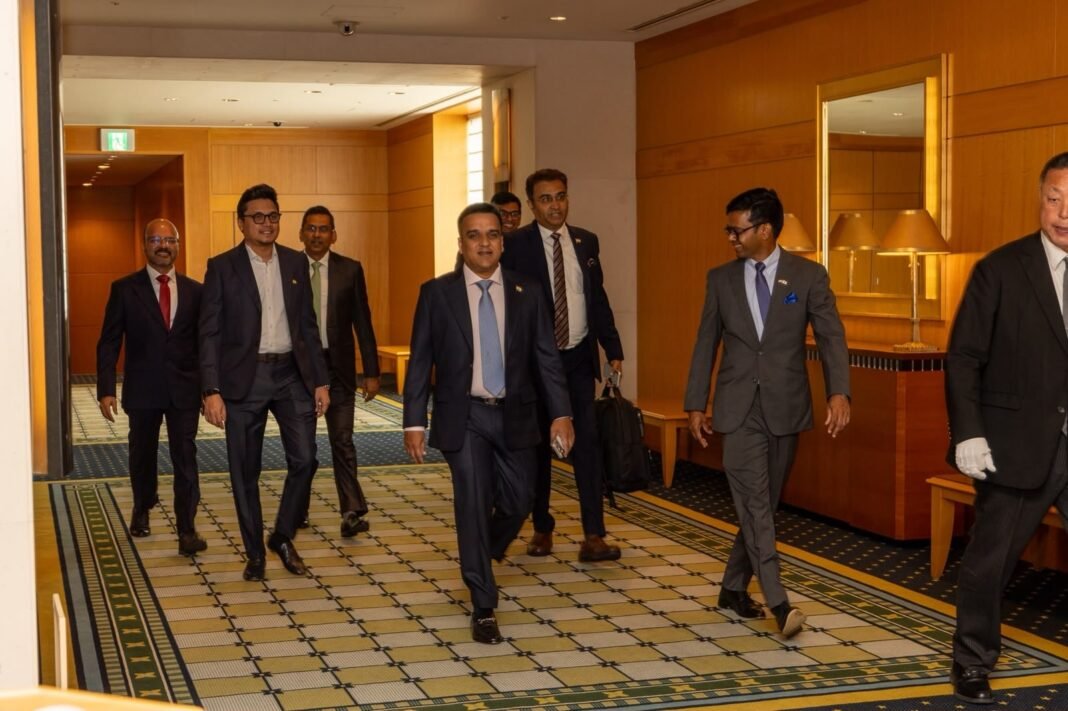
Gujarat’s Deputy Chief Minister Harsh Sanghavi is in Japan this week, taking the state’s investment pitch to Kobe, Osaka and Tokyo ahead of the Vibrant Gujarat Global Summit 2027. The trip, which also includes a South Korea leg, is part of the state government’s global outreach before the summit returns to Gandhinagar from 10 to 12 January 2027.
His first big public moment came in Kobe. There, Sanghavi met the Gujarati and wider Indian community and made a clear ask: stop treating diaspora ties as a once-every-two-years photo opportunity. Instead, he wants a year-round system that turns goodwill into business for Gujarat’s small and medium enterprises.
Here’s everything you need to know about the Harsh Sanghavi Japan visit, why Japan matters so much to Gujarat, and what it could mean for Ahmedabad.
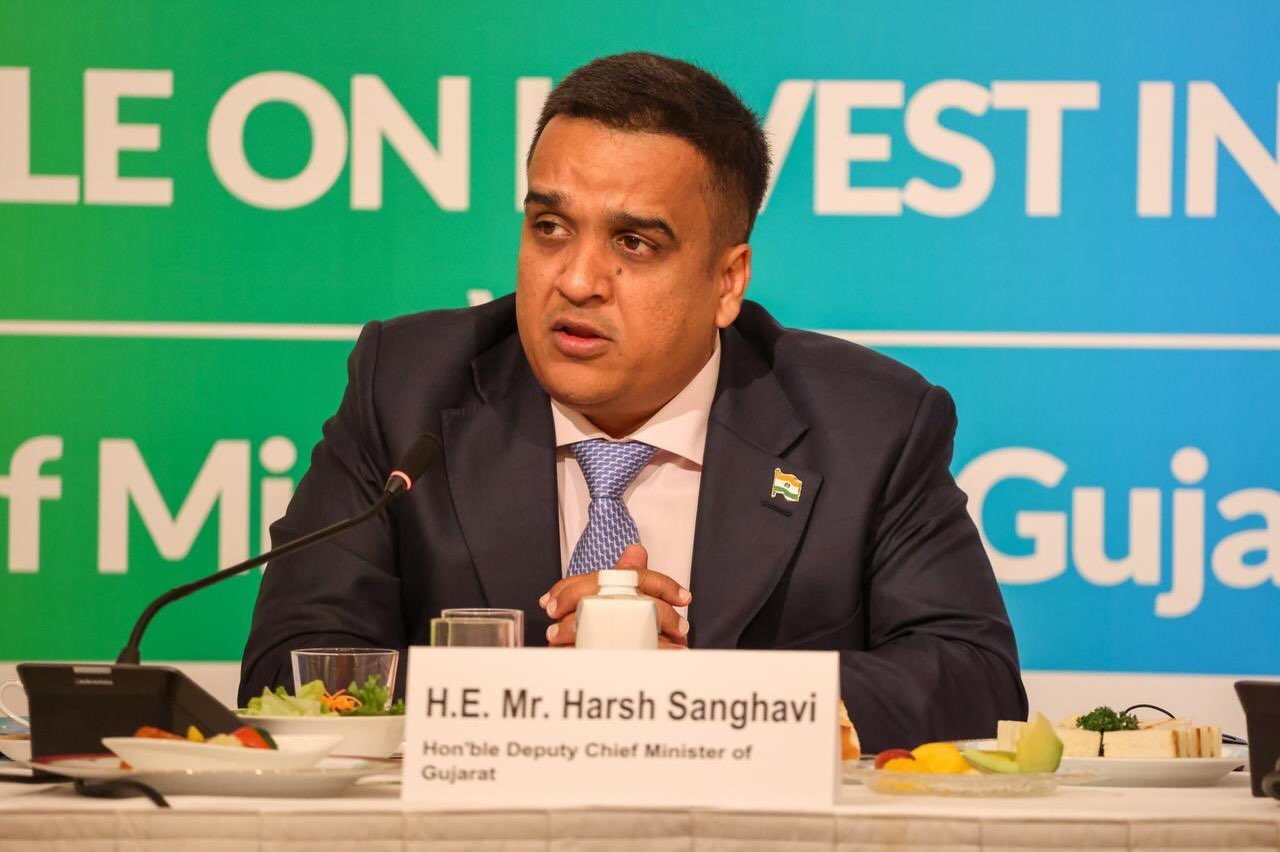
Harsh Sanghavi Japan Visit: Key Takeaways
- Who: Harsh Sanghavi, Deputy Chief Minister of Gujarat, who also handles Industries, MSME, Home, Tourism and Civil Aviation.
- Where: Kobe, Osaka and Tokyo in Japan, followed by Daegu and Seoul in South Korea.
- When: The delegation landed at Kansai International Airport in mid-October 2026.
- Why: To attract Japanese and Korean investment and promote the Vibrant Gujarat Global Summit 2027.
- Big message: Gujarat wants a permanent platform linking its MSMEs with Japanese partners, backed by the state Industries Department and the Indian Embassy.
- Next stop: The Vibrant Gujarat Global Summit 2027, set for 10 to 12 January in Gandhinagar.
Why Is Harsh Sanghavi Visiting Japan?
The short answer is investment. The Harsh Sanghavi Japan visit is a pre-summit roadshow of sorts. Every Vibrant Gujarat edition is preceded by months of delegations travelling abroad, and this one is no different.
Before leaving, reports said the delegation planned meetings with leading Japanese industrialists, investors and government officials. The goal was simple: to present Gujarat as the most business-ready state in India and to persuade Japanese companies to commit fresh capital.
According to the itinerary shared by the state, Sanghavi is holding one-on-one meetings with industrialists and investors in Osaka, Kobe and Tokyo. These conversations cover Gujarat’s industrial policies, infrastructure, investment opportunities and the facilities the state offers businesses.
After Japan, the delegation moves on to South Korea. There, the focus shifts to new technology, manufacturing and industrial collaboration with Korean companies in Daegu and Seoul.
Who Is Travelling With the Deputy CM?
Sanghavi is accompanied by senior officials of the Gujarat government. Among them is senior IAS officer Mamta Verma of the state’s Industries and Mines Department. Representatives of leading industry houses are also part of the group, according to pre-departure reports.
Notably, Verma is no stranger to this circuit. Last year, the Consulate General of India in Osaka-Kobe hosted her during a Gujarat delegation that also met the Governor of Hyogo Prefecture. In other words, the groundwork for this trip has been building for a while.
Kobe: The Moment That Defined the Trip
Kobe has a special place in the story of Indians in Japan. The port city is home to one of Japan’s oldest Indian communities, and Gujarati families have long been a prominent part of it.
Sanghavi’s interaction took place at the Kobe India Club, an institution that has served the community since 1904. Before the gathering, he visited a Jain temple nearby and offered prayers.
“Beyond Formal Engagements”: What Sanghavi Said
The Deputy CM’s speech had one central idea. Gujarat’s bond with its people abroad, he argued, should not depend on official visits that come around every two years. Instead, he called for “a robust mechanism for continuous dialogue.”
He then laid out what that could look like in practice:
- A structured framework: A sustained engagement model that turns personal and community ties into economic opportunities.
- Doors for MSMEs: Using the trust Indians have earned in Kobe and across Japan to open new markets for Gujarat’s small and medium businesses.
- A local business platform: A space in Japan where Gujarat’s industries can meet Japanese partners, explore markets and find collaborators.
- Official backing: The Gujarat Industries Department and the Indian Embassy would coordinate and support these partnerships.
He also praised Gujarati families abroad for staying connected to home and for their work in social welfare and community development. Community leaders, in turn, welcomed him and pledged to deepen trade, business and cultural links with Gujarat.
Why the MSME Angle Matters
Most investment headlines are about giant factories and billion-dollar announcements. However, Sanghavi’s Kobe pitch was pointedly about smaller businesses.
That matters for a city like Ahmedabad. The city and its surrounding industrial belt are home to thousands of MSMEs in engineering, chemicals, textiles, pharma and auto components. Many of them supply larger manufacturers but rarely get a direct shot at overseas buyers.
A permanent Gujarat-Japan business platform could change that. For instance, a precision-parts maker in Vatva or Naroda could find a Japanese buyer without waiting for the next summit. Similarly, Japanese firms looking to diversify their supply chains could find vetted Gujarati partners more easily.
Of course, the details of how such a platform would work have not yet been announced. Still, the intent signals a shift from summit-led deal-making to steady, ongoing business matchmaking.
Gujarat and Japan: A Partnership Built Over Decades
To understand why a Deputy CM is spending a week in Japan, you need to look at the relationship’s history. Japan is not just another investor for Gujarat. It is one of the state’s most consistent partners.
Partner Country Since 2009
Japan has been a partner country of the Vibrant Gujarat Global Summit since 2009, as the Embassy of India in Tokyo has noted at past Vibrant Gujarat events. That makes it one of the summit’s longest-standing international partners.
Over the years, Gujarat’s Chief Ministers have repeatedly led delegations to Japan. Most recently, Chief Minister Bhupendra Patel travelled to Japan and Singapore in late 2023 ahead of the 2024 summit. That visit included a roadshow in Tokyo, meetings with JETRO and the Japan Bank for International Cooperation, and a hydrogen-focused stop in Yamanashi Prefecture.
Japanese Industry on Gujarat’s Map
Japanese companies are already a visible part of Gujarat’s industrial landscape. Here are a few landmarks most Amdavadis will recognise:
- Automobiles: Suzuki’s manufacturing plant at Hansalpur, near Becharaji in Mehsana district, has turned north Gujarat into a car-making hub. Honda’s two-wheeler plant sits at Vithalapur in Ahmedabad district.
- Japanese industrial park: The Mandal-Becharaji Special Investment Region hosts a dedicated zone for Japanese companies, many of them auto-component suppliers.
- Steel: AM/NS India’s Hazira complex near Surat is a joint venture involving Japan’s Nippon Steel.
- Bullet train: The Mumbai-Ahmedabad High Speed Rail project uses Japanese Shinkansen technology and is financed largely through Japanese assistance. Details are available from the National High Speed Rail Corporation Limited.
Beyond these, Japanese firms are active in chemicals, engineering and, increasingly, semiconductors. Gujarat’s push into chip manufacturing at Dholera and Sanand has made Japanese technology partners even more valuable.
The Davos Connection
The Japan push did not start this month. In January 2026, Sanghavi attended the World Economic Forum in Davos, Switzerland. There, he met Takayuki Sumita, Chairman of Japan’s Sumitomo Group, to discuss investment in liquefied natural gas, according to All India Radio News.
Those talks focused on Gujarat’s clean energy and industrial sectors. Therefore, the current visit can be seen as a follow-through on conversations that began months ago.
Vibrant Gujarat Global Summit 2027: What You Should Know
The Harsh Sanghavi Japan visit is ultimately about one event. So here is a quick primer on the summit itself.
| Detail | Information |
|---|---|
| Event | Vibrant Gujarat Global Summit 2027 |
| Edition | 11th |
| Dates | 10 to 12 January 2027 |
| Venue | Gandhinagar, Gujarat |
| First held | 2003 |
| Focus areas | Regional growth, emerging technologies such as AI, and the Viksit Bharat @2047 vision |
| Official website | vibrantgujarat.com |
According to an advisory circulated by Indian missions abroad, the 2027 edition will focus on decentralised regional growth, emerging technologies including artificial intelligence, and India’s long-term development roadmap. It expects heads of state, ministers, corporate leaders, policymakers and academics.
The Road to Gandhinagar
The state has been building momentum for months. In late August 2026, a curtain raiser for the summit was held in New Delhi, where both Chief Minister Bhupendra Patel and Deputy CM Sanghavi addressed investors.
That event followed the Chief Minister’s own delegation visit to the USA and Canada. Sectors highlighted in the run-up include:
- Renewable energy and green hydrogen
- Automobiles and electric vehicles
- Semiconductors and electronics
- Healthcare and pharmaceuticals
- Railways and infrastructure
- AI, data centres, IT and BPM
- Chemicals and cement
- Banking, financial services and insurance
Japan has strong capabilities in nearly every one of these sectors. As a result, it is a natural target for Gujarat’s pitch.
Who Is Harsh Sanghavi?
For readers outside Gujarat politics, a quick profile helps explain why he is leading this trip.
Harsh Sanghavi is a BJP leader from Surat. He represents the Majura constituency in the Gujarat Legislative Assembly, a seat he has won three times since 2012. In October 2025, he was sworn in as Gujarat’s Deputy Chief Minister during a major cabinet reshuffle under Chief Minister Bhupendra Patel. He was 40 when he took office.
His current portfolios include:
- Home
- Law and Justice
- Industries
- Micro, Small and Medium Enterprises (MSME)
- Tourism
- Civil Aviation
Before becoming Deputy CM, he served as Minister of State with independent charge for portfolios including Home, Sports and Youth Affairs, and Transport. Since he now holds both Industries and MSME, leading an investment delegation is a natural extension of his role.
The South Korea Leg: Daegu and Seoul
Japan is the headline, but the trip doesn’t end there. After Tokyo, the delegation heads to South Korea for meetings in Daegu and Seoul.
South Korea brings different strengths to the table. Its companies lead the world in electronics, batteries, shipbuilding and steel. Several Korean firms already have a presence in India, and Gujarat is keen to attract more.
The Korean meetings will focus on new technology, manufacturing and industrial collaboration. Daegu, in particular, is known for its textile, machinery and auto-parts industries. That makes it a good match for Gujarat’s own manufacturing base.
What the Japan Visit Could Mean for Ahmedabad
Investment summits can feel distant from everyday city life. However, Japanese investment in Gujarat has a very real footprint in and around Ahmedabad. Here’s why this visit is worth watching.
1. Jobs in the Industrial Belt
The Sanand, Becharaji and Mandal clusters sit within commuting distance of Ahmedabad. New Japanese projects in these areas usually mean jobs for engineers, technicians and skilled workers from the city. Furthermore, they create demand for local suppliers, logistics firms and service providers.
2. Opportunities for Local MSMEs
Sanghavi’s proposal for a Gujarat-Japan business platform could directly benefit Ahmedabad’s small manufacturers. GIDC estates such as Vatva, Naroda, Odhav and Changodar are full of firms that could supply Japanese buyers. A structured matchmaking system would lower the barrier to entry.
3. The Bullet Train Effect
The Mumbai-Ahmedabad bullet train is the most visible symbol of Japan-Gujarat cooperation. Its Sabarmati terminal is set to become a major transport hub in Ahmedabad. Continued Japanese engagement keeps the spotlight on infrastructure projects that will reshape how Amdavadis travel.
4. Startups and Technology
Japan’s interest in semiconductors, AI and green hydrogen overlaps with sectors where Ahmedabad’s startup scene is growing. Closer government-to-government ties often open doors to accelerator programmes, research partnerships and venture funding.
5. Culture and Tourism
Sanghavi also holds the Tourism and Civil Aviation portfolios. Better links with Japan could, over time, encourage more Japanese tourists to explore Gujarat’s heritage, including Ahmedabad’s UNESCO-listed walled city. Better air connectivity would help both business and leisure travel.
A Quick Timeline of the Trip
Here’s how the visit has unfolded so far, based on official statements and reports.
| Stage | What Happened |
|---|---|
| Early October 2026 | Reports confirm the Deputy CM’s planned Japan trip ahead of the summit. |
| Mid-October 2026 | The delegation departs from Gujarat and lands at Kansai International Airport. |
| Kobe | Sanghavi visits a Jain temple and meets the Gujarati and Indian community at the Kobe India Club. |
| Osaka, Kobe and Tokyo | One-on-one meetings with Japanese industrialists and investors. |
| Daegu and Seoul | Meetings with South Korean business leaders on technology and manufacturing. |
| 10 to 12 January 2027 | Vibrant Gujarat Global Summit in Gandhinagar. |
We will update this story as more details emerge from the Tokyo and Seoul meetings, including any agreements or investment commitments.
The Bigger Picture: Why States Court Japan
Gujarat is not the only Indian state chasing Japanese capital. Several states send delegations to Tokyo and Osaka every year. So why does Japan attract so much attention?
First, Japanese investment tends to be long-term. Companies such as Suzuki have stayed in India for decades and kept expanding. Second, Japanese firms bring technology and management practices along with capital. Third, Japan is actively diversifying its supply chains, and India is one of its preferred destinations.
At the national level, India and Japan have set ambitious investment goals. In 2022, the two governments committed to 5 trillion yen of Japanese public and private investment in India over five years, as the Ministry of External Affairs has noted in bilateral statements. States that build the strongest relationships stand to capture the largest share of that flow.
Gujarat’s advantage lies in its track record. It has ports, power, industrial land and an established Japanese business community. The Harsh Sanghavi Japan visit is an attempt to convert that head start into fresh commitments before the summit.
What Japanese Investors Typically Look For
Pitching to Japanese companies is different from pitching to investors elsewhere. Japanese firms are known for careful, slow decision-making. They often spend years studying a location before committing. Once they invest, however, they tend to stay and expand.
So what does a Japanese company usually want to see before choosing a state? Here are the factors that typically come up in such meetings:
- Reliable infrastructure: Uninterrupted power, water, roads and port access matter more than headline incentives.
- Ready industrial land: Plug-and-play plots in dedicated zones reduce the time from decision to production.
- Policy stability: Japanese firms value predictable rules over short-term sweeteners.
- Skilled workforce: Access to trained engineers and technicians is essential, especially for precision manufacturing.
- Supplier ecosystem: Large manufacturers want local vendors who can meet strict quality standards.
- Quality of life: Expat employees need good housing, schools, healthcare and, often, Japanese food and community support.
Gujarat scores well on several of these. Its ports, power surplus and industrial estates are well established. Meanwhile, the existing Japanese business community around Ahmedabad and Becharaji gives new investors a support network.
The supplier ecosystem point is where Sanghavi’s MSME pitch fits in neatly. If Gujarat’s small manufacturers can meet Japanese quality standards, they become a selling point for attracting larger investments. In turn, larger investments create more demand for those same suppliers.
The Diaspora as a Business Bridge
Sanghavi’s Kobe speech also reflects a wider trend in how Indian states think about their people abroad. Earlier, the diaspora was mostly seen through a cultural and emotional lens. Today, states increasingly view overseas communities as economic connectors.
Gujaratis are particularly well placed for this role. The community has a long trading tradition and a strong presence in business networks across the world. In Japan, Indian families in cities such as Kobe and Tokyo have built decades of relationships with Japanese suppliers, buyers and institutions.
Those relationships are hard to replicate through official channels alone. A diaspora business owner who already trades with Japanese firms can introduce a Gujarati MSME far faster than a formal delegation can. That is precisely the kind of continuous, informal connection Sanghavi seemed to be asking for.
The challenge, of course, will be execution. A platform needs dedicated staff, a clear process and regular events to stay useful. If the Industries Department and the Indian Embassy can provide that structure, the diaspora’s goodwill could translate into real orders and partnerships.
What Happens Next?
Once the delegation returns, attention will turn to concrete outcomes. Here’s what to look for in the coming weeks:
- Investment intentions: Whether any Japanese or Korean companies announce plans or sign memorandums of understanding.
- The MSME platform: Whether the state formally sets up the Japan business platform Sanghavi proposed in Kobe.
- Summit partnerships: Whether Japan confirms its role as a partner country for the 2027 edition.
- More roadshows: Further international and domestic roadshows are likely as the January summit approaches.
For businesses in Ahmedabad, the best move is to stay informed. Registration and event details for the summit will be published on the official Vibrant Gujarat website. Companies interested in Japanese partnerships can also explore resources from JETRO, the Japan External Trade Organization.
Frequently Asked Questions
Why did Harsh Sanghavi go to Japan?
Harsh Sanghavi went to Japan to attract investment into Gujarat and promote the Vibrant Gujarat Global Summit 2027. He is holding meetings with Japanese industrialists, investors and community leaders.
Which cities is Harsh Sanghavi visiting in Japan?
The Deputy CM is visiting Kobe, Osaka and Tokyo in Japan. The delegation then travels to Daegu and Seoul in South Korea.
What did Harsh Sanghavi say in Kobe?
In Kobe, Sanghavi called for continuous dialogue between Gujarat and its diaspora, rather than contact only during delegation visits. He also proposed a local platform to connect Gujarat’s industries and MSMEs with Japanese business partners.
When is the Vibrant Gujarat Global Summit 2027?
The Vibrant Gujarat Global Summit 2027 will be held from 10 to 12 January 2027 in Gandhinagar. It is the 11th edition of the summit, which began in 2003.
Since when has Japan been a Vibrant Gujarat partner country?
Japan has been a partner country of the Vibrant Gujarat Global Summit since 2009. It is one of the summit’s longest-standing international partners.
Which portfolios does Harsh Sanghavi hold?
As Deputy Chief Minister, Harsh Sanghavi holds Home, Law and Justice, Industries, MSME, Tourism and Civil Aviation. He became Deputy CM in October 2025.
Who is accompanying Harsh Sanghavi on the Japan visit?
Senior Gujarat government officials, including IAS officer Mamta Verma of the Industries and Mines Department, are part of the delegation. Representatives of industry houses are also travelling with him.
How does the Japan visit benefit Ahmedabad?
New Japanese investment often lands in industrial clusters near Ahmedabad, such as Sanand and Becharaji. This can create jobs and open export opportunities for the city’s MSMEs.
The Bottom Line
The Harsh Sanghavi Japan visit is about more than handshakes and photo-ops. Its most interesting idea came from the Kobe India Club: a permanent bridge between Gujarat’s small businesses and Japanese partners, built on the trust the diaspora has earned over a century.
If that idea becomes a working platform, its impact could outlast the summit itself. For Ahmedabad’s manufacturers, startups and job seekers, that is the part of this story worth following.
Stay tuned to Amdavad Gully for updates from the Tokyo and Seoul meetings and full coverage of the Vibrant Gujarat Global Summit 2027.