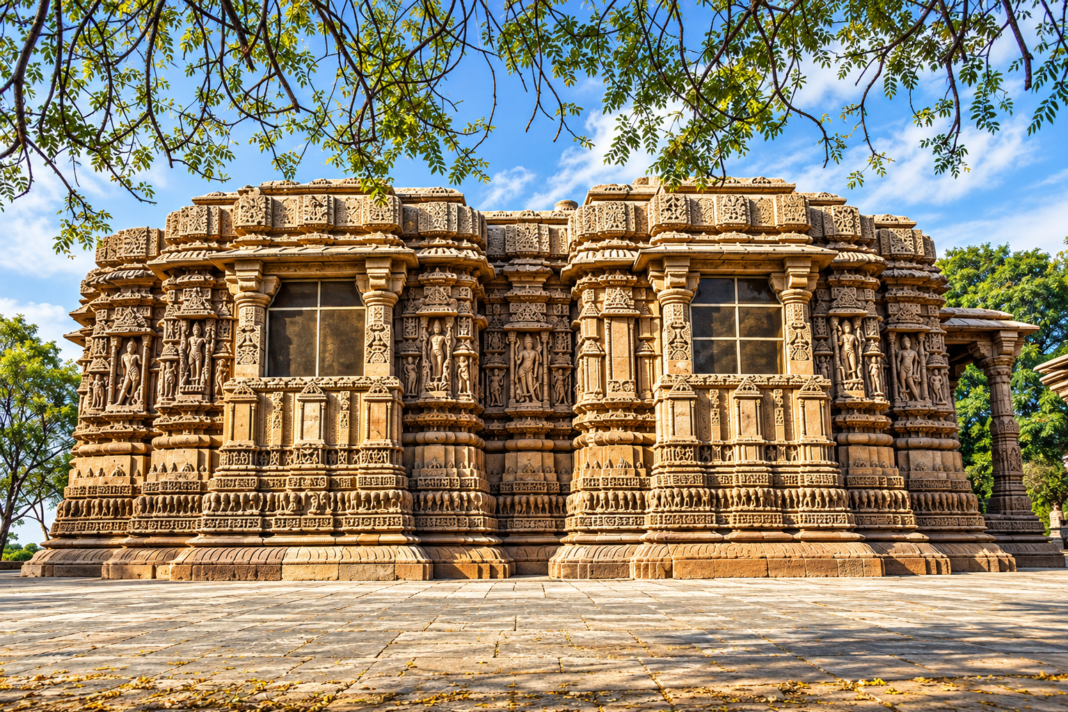
Quick answer: The most famous temples in Ahmedabad are the Jagannath Temple in Jamalpur, the Bhadrakali Temple at Bhadra Fort, the Kalupur Swaminarayan Mandir, the Hutheesing Jain Temple, ISKCON Ahmedabad, Camp Hanuman and the Vaishno Devi Temple on SG Highway. Also, three great temples sit just outside the city: Akshardham, Trimandir Adalaj and Koba Jain Tirth.
Ahmedabad began in 1411 as the capital of a sultan. Soon, it grew rich as a city of traders. Then, in 2017, it became India’s first UNESCO World Heritage City. Its temples tell this story better than any museum.
Some temples hide inside the pols of the old city, behind carved wooden doors. Others stand on SG Highway, lit up at night and full on weekends. In fact, one temple sends three giant chariots through the city every monsoon.
So, this guide lists the famous temples in Ahmedabad that are worth your time. For each one, you’ll find what makes it special, where it is, its timings and a useful tip. Whether you live here or you’re visiting for a day, you can plan your darshan in minutes.
Famous Temples in Ahmedabad at a Glance
| Temple | Deity | Area | Best known for |
|---|---|---|---|
| Jagannath Temple | Jagannath, Balabhadra, Subhadra | Jamalpur | Ahmedabad Rath Yatra |
| Bhadrakali Temple | Bhadrakali (Laxmi) | Bhadra Fort, Lal Darwaza | City’s founding legend, Navratri |
| Kalupur Swaminarayan Mandir | NarNarayan Dev | Kalupur, old city | First Swaminarayan temple (1822) |
| Hutheesing Jain Temple | Dharmanatha | Outside Delhi Darwaza | White marble, built in 1848 |
| ISKCON Ahmedabad | Radha Govinda | Satellite, near SG Highway | Aartis, kirtan, Janmashtami |
| Camp Hanuman | Hanuman | Shahibaug Cantonment | Centuries-old swayambhu idol |
| Vaishno Devi Temple | Vaishno Devi | SG Highway | Replica of the Jammu shrine |
| BAPS Swaminarayan Mandir | Swaminarayan | Shahibaug | Major BAPS centre in the city |
| Gita Mandir | Krishna | Astodia | Gita verses on its walls |
| Akshardham | Swaminarayan | Gandhinagar (30 km) | Pink sandstone, water show |
| Trimandir | Simandhar Swami, Krishna, Shiva | Adalaj (20 km) | Non-sectarian temple |
| Koba Jain Tirth | Mahavir Swami | Koba (20 km) | Sunlight on the idol every 22 May |
Temples in the Old City
The old city lies east of the Sabarmati. This is where Ahmedabad began. As a result, its temples are older and closer together. Plan to walk, and go early, before the lanes fill up.
1. Jagannath Temple, Jamalpur
If you visit only one temple here, make it this one. The Jagannath Temple honours Lord Jagannath, his brother Balabhadra and his sister Subhadra. These are the same three deities people worship at Puri in Odisha.
Locals believe the temple is more than 400 years old. Today, the Shree Jagannath Mandir Trust runs it. For most of the year, it is a busy local temple with a large cowshed. However, one day in the monsoon makes it famous across India.
- Timings: About 4:30 AM to 1:00 PM, and 3:00 PM to 9:00 PM
- Entry: Free
- Location: Jamalpur, near Jamalpur Darwaza and Astodia
- Best time: Early morning for a calm darshan
The Ahmedabad Rath Yatra
Every year on Ashadhi Bij, in June or July, priests place the deities on three huge wooden chariots. Then, thousands of devotees pull the chariots through the old city on a route of about 14 km.
Many people call it the third largest Rath Yatra in India, after Puri and Kolkata. In addition, Gujarat treats it as a state festival. The day starts before dawn with the mangla aarti. Next, the Chief Minister of Gujarat sweeps the path with a golden broom. This ritual is called the pahind vidhi.
After that, dressed-up elephants, floats, akhadas and bhajan groups join the parade. At Saraspur, the chariots stop at the deities’ “maternal home”. Here, volunteers serve a meal to lakhs of people. Along the route, devotees also receive prasad of sprouted moong, jamun and cucumber. The 149th Rath Yatra took place in 2026.
Tip: On Rath Yatra day, find your spot on the route early, mainly near Kalupur and Saraspur. Police divert traffic for most of the day, so take the metro or walk in.
2. Bhadrakali Temple, Bhadra Fort
This temple is small. Still, no temple is more closely tied to the city’s identity. It sits inside Bhadra Fort, near Lal Darwaza and Teen Darwaza. Sultan Ahmad Shah I built this fort in 1411, when he founded Ahmedabad.
During Maratha rule, people set up the shrine in a room of the fort. Inside, you’ll see a black, four-armed image of the Goddess. Many also link the fort’s name to this temple.
The legend: One night, so the story goes, the goddess Laxmi tried to leave the city through the fort gate. However, the watchman, Siddique Kotwal, stopped her. He asked her to wait while he took the king’s permission. To make sure she could never leave, he gave up his own life. As a result, Laxmi, and the city’s wealth, stayed in the city forever.
Today, a tomb to the Kotwal stands near the temple. Moreover, locals say a Muslim family has kept a lamp lit for Laxmi at Teen Darwaza for centuries. For many locals, this tale shows how the city’s faiths live side by side.
- Location: Bhadra Fort, near Lal Darwaza
- Entry: Free
- Busiest: Navratri, Diwali and Sundays
- Nearby: Teen Darwaza, Jama Masjid and Manek Chowk
Tip: Pair a morning darshan with a walk round the fort. Then, come back to Manek Chowk at night for its famous street food.
3. Shree Swaminarayan Mandir, Kalupur
This is the first temple of the Swaminarayan faith. Bhagwan Swaminarayan himself consecrated it in 1822, on land the British government gave. Today, it serves as the headquarters of the NarNarayan Dev Gadi.
What makes it special is the detail. Almost every surface has carvings or bright paint. For example, you’ll see Burmese teak pillars, painted arches and brackets shaped like animals. Inside, devotees worship NarNarayan Dev and Radha Krishna. Women pray in their own area, as is the custom here.
- Location: Kalupur, a short walk from Kalupur railway station
- Entry: Free
- Best time: Early morning, when light falls on the carvings
Tip: The city’s Heritage Walk starts from this temple every morning. It’s the best way to see the pols, havelis, bird feeders and hidden shrines.
4. Hutheesing Jain Temple, Delhi Darwaza
Just outside Delhi Darwaza stands the city’s finest Jain temple. Sheth Hutheesing, a rich merchant, began building it. After he died, his widow Harkunvar Shethani finished it in 1848. During a famine, the project also gave work to hundreds of craftsmen.
The temple honours Dharmanatha, the 15th Jain tirthankara. Its white marble courtyard holds a main shrine and 52 smaller shrines along the walls. At the entrance, a tall pillar called a manastambha greets visitors.
- Location: Shahibaug Road, outside Delhi Darwaza
- Entry: Free
- Rules: Leave leather items outside, and ask before taking photos
- Best time: Morning, when the marble looks its best
Tip: Keep your voice low and dress modestly. Also, give devotees space during the morning puja.
5. Gita Mandir
Gita Mandir gives its name to the city’s main bus station area. This Krishna temple has verses of the Bhagavad Gita on its walls. It’s not a big tourist stop. Even so, it pairs well with the nearby Jagannath Temple for a morning of old-city darshan.
Temples in Shahibaug
6. Camp Hanuman Temple
Camp Hanuman sits inside the army cantonment in Shahibaug. It’s one of the city’s most loved Hanuman temples. According to local history, Pandit Gajanan Prasad founded it about 250 years ago.
Devotees believe the idol is swayambhu, or self-manifested. Because the temple lies in an army area, soldiers and their families have always prayed here.
- Timings: Open until about 9:00 PM, and until about 11:00 PM on Tuesdays and Saturdays
- Entry: Free, but carry photo ID for the cantonment
- Busiest days: Tuesdays, Saturdays and Hanuman Jayanti
Tip: Saturday evenings get very crowded. For a quiet darshan, go on a weekday morning instead. Also, follow army staff instructions on parking and photos.
7. BAPS Shri Swaminarayan Mandir
This Shahibaug temple is a key centre of BAPS, the group that built Akshardham in Gandhinagar and Delhi. It holds daily aartis and Sunday assemblies. It also hosts big festivals for Diwali and Annakut. The mood is calm and orderly, so it suits families well.
- Location: Shahibaug, near Dafnala
- Entry: Free
- Best time: Evening aarti, or the Annakut after Diwali, when devotees offer hundreds of dishes to the deities
Temples on SG Highway
Temples in the west of the city are newer and bigger. They have parking, gardens and wide courtyards. Also, they’re easy to visit after work.
8. ISKCON Temple Ahmedabad
Its full name is Sri Sri Radha Govinda Dham. It stands near Iscon Cross Road, which takes its name from the temple. Here, devotees worship Radha and Govinda (Krishna).
Visitors love its carved domes, marble halls and lively kirtan. In particular, its Krishna birthday fest is one of the biggest in the city.
Daily aartis run from early morning to night:
- Mangala aarti: 4:30 AM
- Shringar aarti: 7:15 AM
- Rajbhog aarti: 12:30 PM
- Afternoon break: About 1:00 PM to 4:00 PM
- Sandhya aarti: 6:30 PM
- Shayana aarti: 8:30 PM
Tip: The temple restaurant serves satvik food without onion or garlic. On Janmashtami night, however, expect long queues, so arrive early. You’ll find the latest timings on the official ISKCON Ahmedabad website.
9. Vaishno Devi Temple
You don’t need to travel to Jammu for a taste of the Vaishno Devi yatra. This temple, near Vaishno Devi Circle on SG Highway, copies the famous shrine. First, you walk up a winding path around a man-made hill. Then, you pass through cave-like tunnels. Finally, you reach the Goddess at the top.
- Location: SG Highway, near Vaishno Devi Circle
- Entry: Free
- Best time: Evenings, when lights come on; Navratri is busiest
- Good for: Families, since children enjoy the climb
Tip: The climb is gentle, but it has steps and narrow tunnels. So, older visitors should take their time. Science City is nearby, which makes it an easy family day out.
Famous Temples Near Ahmedabad
These three temples lie in or near Gandhinagar. Still, most Amdavadis think of them as part of their city. Each one makes an easy half-day trip.
10. Swaminarayan Akshardham, Gandhinagar
BAPS opened Akshardham in 1992 in Gandhinagar’s Sector 20. Today, it’s one of the most visited temples in Gujarat. Craftsmen carved its main monument from about 6,000 tonnes of pink sandstone, without any steel. Inside sits a golden murti of Bhagwan Swaminarayan. Around it, you’ll find gardens, show halls and an evening water show.
- Closed: Every Monday
- Mandir darshan: 10:00 AM to 7:30 PM
- Aarti: 10:00 AM and 6:30 PM
- Entry: Free; exhibitions and the water show need tickets
- Rules: Leave phones, cameras and bags at the entrance counter
- Distance: About 30 km, or 45 minutes by car
Tip: Reach by mid-afternoon to see the halls. Then, stay for the water show after sunset. Check timings on the official Akshardham visitor page.
11. Trimandir, Adalaj
Trimandir stands on the highway to Gandhinagar, at Adalaj. The teachings of Dada Bhagwan inspired it, and its idea is simple: one temple can honour many faiths. For this reason, it houses Simandhar Swami from the Jain tradition, along with Krishna and Shiva. At night, its white walls and lawns glow.
- Location: Adalaj, on the Sarkhej–Gandhinagar Highway
- Entry: Free
- Best time: Evening, when the lights come on
Tip: The Adalaj Stepwell, a five-storey carved well from 1499, lies just a few minutes away. So, see both on one trip.
12. Koba Jain Tirth
The Shri Mahavir Jain Aradhana Kendra at Koba is a peaceful Jain temple and study centre. It also has a large library of old manuscripts and a museum of Jain art.
However, Koba is most famous for one moment each year. On 22 May, at about 2:07 PM, sunlight enters through an opening and lights up the forehead of the Mahavir Swami idol. Devotees call this Suryabhishek. It marks the day a revered Jain monk passed away, and it draws large crowds.
- Location: Koba, on the road to Gandhinagar
- Entry: Free
- Don’t miss: Suryabhishek on 22 May, and the museum
Tip: Koba lies on the way to Gandhinagar and GIFT City. So it fits into a day with Akshardham and Trimandir.
A One-Day Ahmedabad Temple Trail
Have just one day? Then follow this route. It covers the best temples in Ahmedabad without much backtracking. For the second half, you’ll need a car or cab.
| Time | Stop | Why |
|---|---|---|
| 7:30 AM | Kalupur Swaminarayan Mandir | Calm mornings; join the Heritage Walk |
| 10:30 AM | Jagannath Temple | Darshan before the midday break |
| 12:00 PM | Bhadrakali and Bhadra Fort | The city’s founding legend |
| 1:00 PM | Lunch in the old city | Gujarati thali or street food |
| 2:30 PM | Hutheesing Jain Temple | Quiet marble courtyards |
| 4:30 PM | Vaishno Devi Temple | Climb the hill before sunset |
| 6:30 PM | ISKCON Ahmedabad | Sandhya aarti and kirtan |
| 8:00 PM | Dinner on SG Highway or at Manek Chowk | The food scene wakes up after dark |
If you have a second morning, add Akshardham, Trimandir and the Adalaj Stepwell. Just remember that Akshardham shuts on Mondays. For longer trips, see our guide to the famous temples in Gujarat, including Dakor, Modhera and Pavagadh.
Which Temple Is Nearest to You?
- Old city (Kalupur, Jamalpur, Lal Darwaza): Jagannath, Bhadrakali, Kalupur Swaminarayan and Gita Mandir
- Shahibaug and Delhi Darwaza: Hutheesing, Camp Hanuman and BAPS Swaminarayan Mandir
- Satellite, Bodakdev and SG Highway: ISKCON and Vaishno Devi
- Towards Gandhinagar: Trimandir, Koba and Akshardham
Festivals at Ahmedabad’s Temples
- Rath Yatra (June or July): The Jagannath procession is the city’s biggest religious event.
- Janmashtami (August or September): ISKCON, BAPS and Jagannath celebrate Krishna’s birth at midnight.
- Navratri (September or October): Bhadrakali and Vaishno Devi draw huge crowds, while the city dances garba every night.
- Diwali and Annakut (October or November): Swaminarayan temples offer hundreds of dishes the day after Diwali.
- Hanuman Jayanti (March or April): Camp Hanuman sees its biggest crowds.
- Mahavir Jayanti and Paryushan: Hutheesing and Koba host major Jain celebrations.
Best Time to Visit Temples in Ahmedabad
November to February is the best season. Cool mornings make old-city walks easy. By contrast, March to June gets very hot, so plan darshan for early mornings and evenings. Then, from July to September, the monsoon and the Rath Yatra make the old city feel festive.
On any day, visit old-city temples early in the morning, before traffic builds. On the other hand, SG Highway temples and Trimandir look best in the evening, when the lights come on.
Temple Etiquette and Practical Tips
- Dress modestly. Cover your shoulders and knees, above all at Jain temples.
- Take off your shoes. Most temples have a free shoe stand at the entrance.
- Leave leather behind at Jain temples. Hutheesing and Koba don’t allow leather belts, wallets or bags.
- Ask before taking photos. Many temples don’t allow photos inside, and Akshardham doesn’t allow phones at all.
- Respect set spaces. Some temples keep men and women in different areas.
- Plan around the afternoon break. Many temples close from about 1 PM to 4 PM.
- Take the metro to the old city. Parking there is hard, but the metro gets you close to Kalupur.
- Carry small change. It helps with offerings, prasad and the shoe stand.
Frequently Asked Questions
Which is the most famous temple in Ahmedabad?
The Jagannath Temple in Jamalpur is the most famous temple in Ahmedabad. Its yearly Rath Yatra is widely counted as the third largest in India, after Puri and Kolkata.
Which is the oldest temple in Ahmedabad?
The Jagannath Temple and Camp Hanuman are among the oldest active temples in Ahmedabad. Locals believe each is several centuries old. By comparison, the Kalupur Swaminarayan Mandir dates to 1822 and the Hutheesing Jain Temple to 1848.
What is the story of the Bhadrakali Temple in Ahmedabad?
Legend says the goddess Laxmi tried to leave Ahmedabad through Bhadra Fort one night. However, the watchman Siddique Kotwal stopped her and gave his life so she could never leave. As a result, the city stayed rich. Today, the Bhadrakali Temple and the Kotwal’s tomb stand in the fort.
What are the ISKCON Ahmedabad timings?
ISKCON Ahmedabad opens with mangala aarti at 4:30 AM and stays open until about 1 PM. Then, it reopens at 4 PM, with sandhya aarti at 6:30 PM and shayana aarti at 8:30 PM.
When is the Ahmedabad Rath Yatra held?
The Rath Yatra takes place every year on Ashadhi Bij, which falls in June or July. The chariots leave the Jagannath Temple in Jamalpur early in the morning and return by evening.
Is Akshardham in Ahmedabad?
No. Akshardham stands in Sector 20 of Gandhinagar, about 30 km from Ahmedabad. It shuts every Monday, but it makes an easy half-day trip on other days.
Is there a Vaishno Devi temple in Ahmedabad?
Yes. Ahmedabad’s Vaishno Devi Temple stands on SG Highway, near Vaishno Devi Circle. It copies the Jammu shrine, with a winding path up a man-made hill to the Goddess.
Which Jain temples in Ahmedabad are worth visiting?
The Hutheesing Jain Temple, outside Delhi Darwaza, is the best known for its white marble and 52 shrines. In addition, Koba Jain Tirth near Gandhinagar is famous for the sunlight that falls on its Mahavir idol every 22 May.
Which Hanuman temple in Ahmedabad is most famous?
Camp Hanuman Temple in the Shahibaug Cantonment is the most famous Hanuman temple in Ahmedabad. It gets busiest on Tuesdays and Saturdays, when it stays open until about 11 PM.
Can I see several Ahmedabad temples in one day?
Yes. First, visit the old-city temples in the morning, such as Kalupur Swaminarayan, Jagannath and Bhadrakali. Next, see Hutheesing in the afternoon. Finally, end with Vaishno Devi and ISKCON’s evening aarti on SG Highway.
The Bottom Line
Ahmedabad’s temples cover six centuries of history in a single day’s drive. Start in the old city, where Jagannath, Bhadrakali and Kalupur Swaminarayan explain how the city began and why it grew rich. Next, slow down at Hutheesing for marble and silence. Then, head west in the evening for ISKCON’s kirtan and the lights of Vaishno Devi.
If you have one more morning, Akshardham, Trimandir and Koba wait on the road to Gandhinagar. Above all, try to visit during the Rath Yatra. Nothing shows you the city quite like three chariots rolling through the pols.
References
- ISKCON Ahmedabad – Temple timings
- Swaminarayan Akshardham, Gandhinagar – Visitor information
- Gujarat Tourism – Bhadra Fort, Ahmedabad
- Incredible India – Rath Yatra Ahmedabad 2026
- Akashvani News – 149th Rath Yatra begins in Ahmedabad
Information is accurate as of September 2026. Temple timings change during festivals, so check with the temple before you go. Spotted an update? Write to us at amdavadgully@gmail.com.