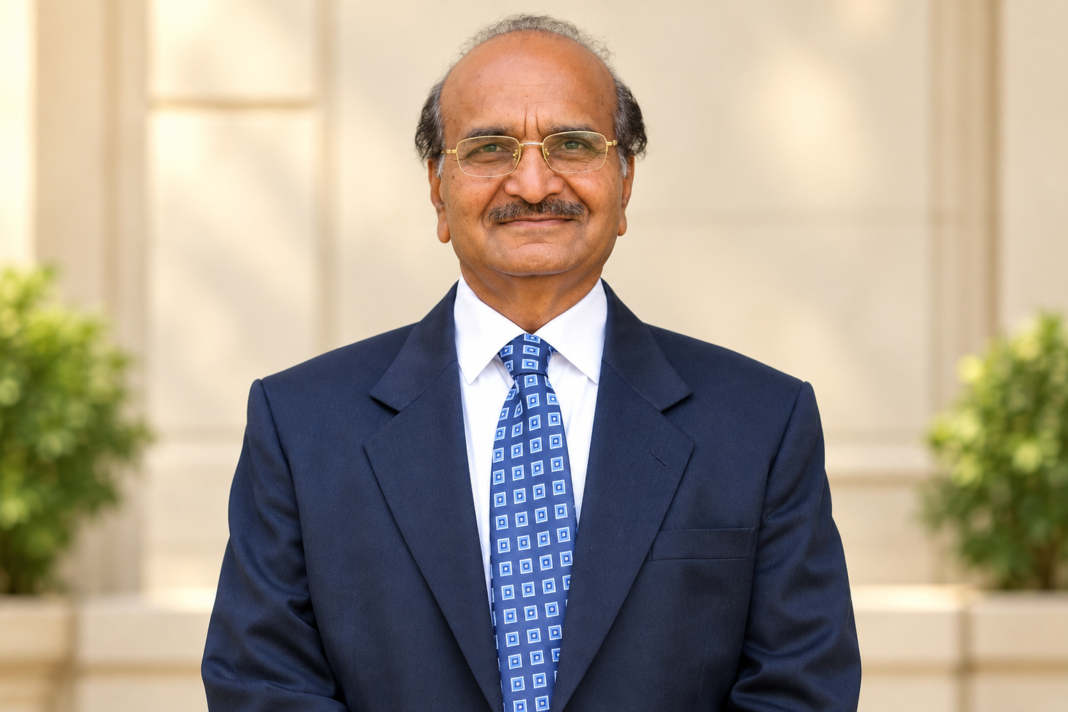
Quick answer: Karsanbhai Patel is the Gujarati businessman who founded Nirma, one of India’s best-known detergent brands. In 1969, he began making washing powder in his backyard and sold it door to door on a bicycle for about ₹3 a kilo, far below the big brands. He named it after his daughter, Nirupama. Today, the Nirma Group spans detergents, soda ash, cement (through Nuvoco Vistas) and pharma. He also set up Nirma University and received the Padma Shri in 2010.
“Washing powder Nirma, washing powder Nirma…” If you grew up in India, you can probably hum the rest. That catchy jingle and the little girl in a white frock twirling on the packet made Nirma a household name.
But behind the brand is a true Ahmedabad success story. Karsanbhai Patel was a farmer’s son and a government chemist. With no big money and no business school degree, he took on one of the world’s largest consumer companies. And he won.
In this guide, we tell the full story of Karsanbhai Patel. You’ll learn about his early life, how he started Nirma, why his low-price plan worked, how the Nirma Group grew into cement and chemicals, and what his life teaches today’s founders. We’ve also added a quick facts table, a timeline and answers to common questions.
The Story in a Few Simple Lines
Short on time? Here’s the story in brief.
- A farmer’s son from a small Gujarat village studies chemistry.
- He gets a safe government job as a chemist.
- In 1969, he makes washing powder at home in his spare time.
- He sells it from his bike for a quarter of the price of the top brand.
- He names it Nirma, after his daughter.
- People love it, so he quits his job to run it full-time.
- Within ten years, it’s one of the top detergents in India.
- Later, the group grows into chemicals, cement and medicines.
- He also builds a big university in Ahmedabad.
Karsanbhai Patel: Quick Facts
| Detail | Information |
|---|---|
| Full name | Dr. Karsanbhai Khodidas Patel |
| Born | 1944–45 (sources differ), Ruppur village, near Patan, Gujarat |
| Education | B.Sc. in Chemistry |
| Early jobs | Lab technician at New Cotton Mills; chemist in Gujarat’s Geology and Mining Department |
| Known for | Founding Nirma in 1969 |
| Company | Nirma Limited and the Nirma Group |
| Headquarters | Nirma House, Ashram Road, Ahmedabad |
| Current role | Non-executive Chairman, Nirma Limited |
| Children | Nirupama (late), Rakesh Patel and Hiren Patel |
| Major honours | Padma Shri (2010), Udyog Ratna (1990), honorary doctorate (2001) |
| Education work | Founder of Nirma University, Ahmedabad |
| Net worth | Several billion US dollars (estimates vary; see below) |
Who Is Karsanbhai Patel?
Karsanbhai Patel is one of India’s best-known self-made business leaders. He’s best known as the founder of Nirma, the low-cost detergent that changed how millions of Indians washed their clothes.
Before Nirma, good washing powder was a treat for many families. The top brands cost too much for most homes, mainly in villages and small towns. So, many people still used soap bars or cheap, rough washing soda. Karsanbhai Patel saw this gap. Then, he filled it with a product that was good enough and cheap enough for everyone.
Today, he’s the chairman of Nirma Limited, a large group based in Ahmedabad. It makes detergents, soaps, salt, soda ash and other chemicals. It also owns a big stake in Nuvoco Vistas, one of India’s major cement makers. On top of that, he built Nirma University, one of Gujarat’s leading private universities.
Early Life and Family Background
Karsanbhai Patel was born into a farming family in Ruppur, a small village near Patan in north Gujarat. Most sources say he was born in 1944 or 1945. At the time, the region was part of the Bombay Presidency under British rule.
Life in the village was simple. His family worked the land, and money was tight. However, his parents valued education. So, they made sure he went to school.
Growing up in a village shaped how he saw the world. He knew what ordinary families could and couldn’t pay for. In fact, that deep feel for the everyday buyer would later become his biggest strength.
Education
Karsanbhai Patel studied science. He completed a Bachelor of Science (B.Sc.) degree in Chemistry by the age of 21. At that time, very few young people from his village went to college. So, his degree was a big step for the family.
His chemistry training turned out to be crucial. It gave him the skills to work in labs. Later, it helped him develop his own detergent formula at home.
Early Career: From Lab Technician to Government Chemist
After college, Karsanbhai Patel took a job as a lab worker at New Cotton Mills in Ahmedabad. The mill was part of the Lalbhai Group, one of the city’s great cloth-making houses. Back then, Ahmedabad was India’s textile capital, often called the “Manchester of the East”.
Later, he moved to a government job. He became a chemist in the Gujarat government’s Department of Geology and Mining. This was a safe, steady job, the kind many families dreamed of. But Karsanbhai Patel had bigger plans.
What India Was Like in 1969
To see why Nirma was such a big deal, you need to picture India at the time. Back then, most homes had no washing machine. Instead, people washed clothes by hand, often at a river, a well or a tap.
For cleaning, many families used soap bars or washing soda. Washing soda was cheap, but it was harsh on hands and clothes. Meanwhile, good detergent powder cost a lot. So, only richer families in cities could buy it often.
Also, the economy was very different. Big firms needed many licences to grow. Foreign brands ruled many shelves. And TV had barely reached most homes. In short, it was not an easy time to start a new brand. Yet that’s exactly what Karsanbhai Patel did.
The Birth of Nirma (1969)
A Backyard Experiment
In 1969, while still working his government job, Karsanbhai Patel began making detergent powder at home. He mixed the ingredients by hand in the backyard of his house. Then, he packed the powder into small packets himself.
His goal was simple. He wanted to make a detergent that worked well but cost far less than the big brands. At the time, Hindustan Lever’s Surf ruled the market. It sold for around ₹13 a kilo. By contrast, Karsanbhai Patel priced his powder at about ₹3 to ₹3.50 a kilo. In other words, it was roughly a quarter of the price.
Selling on a Bicycle
Next came the hard part: selling it. Karsanbhai Patel didn’t have a sales team, a shop or an ad budget. So, he did it himself. Every morning, he loaded packets onto his bicycle. Then, on his way to the office, he sold them door to door.
According to popular accounts, he sold around 15 to 20 packets a day at first. It wasn’t much. However, customers who tried it came back for more. Soon, word spread from house to house and from street to street.
Why the Name “Nirma”?
Karsanbhai Patel named his detergent after his daughter, Nirupama. Many accounts say she died young in an accident. By naming the brand after her, he found a way to keep her memory alive. Moreover, her image inspired the famous little girl in a white frock on every Nirma pack.
Today, that girl is one of the most recognised brand images in India. So, in a way, Nirupama’s name and spirit live on in millions of homes.
Quitting the Government Job
For about three years, Karsanbhai Patel ran Nirma on the side. Then, around 1972, he made a bold choice. He quit his secure government job to focus on the business full-time. For a man from a farming family, leaving a steady salary was a huge risk. Still, he believed in his product.
How Detergent Works (in Simple Words)
You don’t need to be a chemist to get the basic idea. Still, it helps to know a little.
Detergent has two main jobs. First, it has to grab dirt and grease and lift them off cloth. The main cleaning agent does this. In many powders, it’s made from a chemical called LAB (linear alkyl benzene). Second, the powder must work well in hard water, which is common in Gujarat. For that, makers add soda ash. It softens the water, so the cleaner can do its job.
Karsanbhai Patel knew this chemistry well. So, he could build a simple formula that cleaned well without costly extras. That know-how was a big part of how he kept the price so low.
How Nirma Took On the Giants
Nirma’s rise is now a classic case study in Indian business schools. So, what made it work? Here are the key reasons.
1. A Price Almost Everyone Could Afford
First and foremost, Nirma was cheap. By pricing it at a fraction of Surf, Karsanbhai Patel opened up a huge new market. Suddenly, millions of lower-income and rural families could afford washing powder for the first time.
2. Low Costs, Kept Low
Next, he kept costs down at every step. He used a simple formula and simple packaging. He also avoided the big overheads of multinational firms. As a result, he could sell cheaply and still make money.
3. A Focus on the Mass Market
Big brands mostly targeted city buyers with more money. Nirma, on the other hand, aimed at everyone else. In fact, this focus on the “bottom of the pyramid” came years before the phrase became popular in business books.
4. Strong Distribution
Nirma also built a wide network of dealers and distributors. Over time, it reached small towns and villages that big brands often ignored. So, the packet with the twirling girl became easy to find almost anywhere.
5. Memorable Advertising
Finally, Nirma’s ads were simple and catchy. The jingle, “Washing powder Nirma, doodh si safedi” (whiteness like milk), became one of India’s best-known ad songs. Later, the tagline “Sabki Pasand Nirma” (everyone’s favourite, Nirma) added to its appeal. In short, once you heard it, you couldn’t forget it.
How Nirma Reached Rural India
Villages were at the heart of Nirma’s rise. In the 1970s and 1980s, most Indians lived in villages. Yet few big brands tried hard to sell there. So, Nirma had the field almost to itself.
The brand spread through small shops, local traders and weekly markets. Also, since the price was low, shopkeepers could sell it fast. That meant they were happy to stock it. Then, as TV reached more homes, the jingle made people ask for Nirma by name. In short, low prices and wide reach worked hand in hand.
The Nirma vs Surf Story
Within about a decade of its launch, Nirma became one of the best-selling detergents in India. By the mid-1980s, it was a household name across much of the country. At its peak, some reports suggest that Nirma even overtook Surf as the top detergent brand in India.
This was a shock for Hindustan Lever (now Hindustan Unilever, or HUL). As a result, the giant had to rethink its plans. It later launched Wheel, a low-priced detergent, which is widely seen as a response to Nirma’s success. Today, business schools often teach this story as a lesson in how a small local player can reshape a whole market.
From Detergent to Diversified Group
Nirma didn’t stop at washing powder. Over the years, Karsanbhai Patel grew it into a large group with many businesses.
Consumer Products
First, Nirma expanded into more household products. Over time, its range grew to include:
- Detergent powders and cakes
- Bathing soaps
- Edible salt
- Shampoo and toothpaste, at various times
At its height, reports suggest Nirma held around 35% of India’s detergent market and around 20% of the soap cake market. It also employed thousands of people. By 2004, the group reportedly had about 14,000 workers.
Backward Integration Into Chemicals
Next came a smart move. Business experts call it backward integration. Put simply, it means making your own raw materials instead of buying them. Detergent needs chemicals such as soda ash and linear alkyl benzene (LAB). So, Nirma set up its own plants to make them.
This had two big benefits. First, it cut costs even further. Second, it turned Nirma into a major chemical maker. Today, Nirma is one of India’s largest producers of soda ash, which is also used to make glass and other goods.
Going Global: Searles Valley Minerals
In late 2007, Nirma made a big global move. It bought Searles Valley Minerals, a US company that produces soda ash and other minerals in California. As a result, Nirma became one of the world’s big soda ash makers. The deal also showed that a company born in an Ahmedabad backyard could compete on the global stage.
Healthcare
Nirma also entered healthcare. By around 1999, it had set up Nirlife, a healthcare arm that makes products such as intravenous (IV) fluids.
What Is Soda Ash, and Why Does It Matter?
Soda ash may sound dull, but it’s everywhere. It’s a white powder used to make glass, detergent, soap, paper and many other goods. In fact, the bottle on your table and the window in your room may both contain it.
For Nirma, soda ash was key for two reasons. First, the group needed a lot of it for its own detergent. So, making it in-house saved money. Second, other companies also need it in big amounts. As a result, Nirma could sell it to them too. Over time, this “boring” chemical became one of the group’s biggest businesses.
The Big Bet on Cement: Nuvoco Vistas
In the 2010s, the Nirma Group made one of its boldest moves yet. It entered the cement business, which is now run through Nuvoco Vistas Corporation.
- 2014: The group entered cement manufacturing.
- 2016: It bought the Indian cement business of Lafarge, part of the global giant LafargeHolcim, in a deal worth about US$1.4 billion.
- 2020: It bought Emami Cement for around ₹5,500 crore.
- 2021: Nuvoco Vistas listed on the Indian stock exchanges through an IPO.
Thanks to these deals, Nuvoco became one of India’s leading cement companies. In fact, many see this as the moment Nirma turned from a soap brand into a true industrial giant. Learn more on the official Nuvoco Vistas website.
Entering Pharma: Glenmark Life Sciences
In September 2023, Nirma made another big move. It agreed to buy a 75% stake in Glenmark Life Sciences, a maker of drug ingredients, for about ₹5,652 crore. Then, in 2024, the company was renamed Alivus Life Sciences. With this deal, the group stepped firmly into the world of medicines.
Taking Nirma Private
For many years, Nirma Limited was listed on the stock market. However, in 2012, the promoter family took the company private through a delisting offer. Since then, Nirma Limited has been privately held. Meanwhile, Nuvoco Vistas, the cement arm, is listed separately.
Nirma University: Giving Back Through Education
Karsanbhai Patel knew how much education had changed his own life. So, he decided to invest in it.
In 1995, he set up the Nirma Institute of Technology in Ahmedabad. Later, in 2003, it grew into Nirma University, run by the Nirma Education and Research Foundation. Today, the university sits on a large green campus on the SG Highway near Gota.
The university has schools of tech, management, pharmacy, science, law, design and architecture. It holds an A+ grade from NAAC. Also, in 2022, the state named it a “Centre of Excellence”. Its well-known alumni include the computer scientist Pranav Mistry.
- Location: SG Highway, Gota, Ahmedabad
- Map: Open map
- Website: nirmauni.ac.in
Nirmalabs
In 2004, Karsanbhai Patel also launched Nirmalabs, an education project focused on building new entrepreneurs. In short, he wanted to help others do what he had done: turn an idea into a business.
Awards and Honours
Over the years, Karsanbhai Patel has received many honours for his work.
- 1990: Udyog Ratna award from the Federation of Associations of Small Scale Industries of India.
- 2001: Honorary doctorate from Florida Atlantic University in the United States.
- 2010: Padma Shri, one of India’s highest civilian awards, presented by President Pratibha Patil.
You can read about the Padma Awards on the official Padma Awards website.
Karsanbhai Patel’s Net Worth
Karsanbhai Patel is one of India’s richest people. However, estimates of his wealth vary a lot, depending on the source and the year.
- 2017: Forbes ranked him 38th among India’s richest, at about US$3.6 billion.
- 2019: Forbes placed him 30th, at about US$3.9 billion.
- 2024: Forbes ranked him 48th, at about US$6 billion. Meanwhile, the Hurun list put his family’s wealth at around US$9 billion.
Wealth figures change with markets and company values. So, for the latest estimate, check his Forbes profile.
Challenges Along the Way
Of course, the road wasn’t always smooth. Here are some of the hurdles the Nirma Group has faced over the years.
- Strong rivals: After Nirma’s rise, big brands fought back with their own low-cost detergents. So, the market became much more crowded.
- Changing tastes: As incomes grew, many buyers moved to premium powders, liquids and machine-wash products.
- Price swings: Chemicals like soda ash go up and down in price with the global market.
- Big deals, big risks: Large buys, such as the cement deals, need a lot of money. As a result, they also carry more risk.
Still, the group kept adapting. Instead of relying only on detergent, it spread into many fields. That way, a slow year in one business could be balanced by growth in another.
Family and the Next Generation
Karsanbhai Patel’s family plays a key role in the Nirma Group today. His two sons, Rakesh Patel and Hiren Patel, help lead the business. According to Nirma’s official board list, Karsanbhai Patel is the non-executive Chairman. Meanwhile, Rakesh Patel is the Vice Chairman, and Hiren Patel is the Managing Director.
Hiren Patel, in particular, is closely linked with the group’s cement push through Nuvoco Vistas. As a result, the next generation has helped take Nirma into new industries. You can see the full board on the official Nirma website.
The Iconic Nirma Jingle and Brand
It’s hard to talk about Nirma without talking about its ads. In the 1980s and 1990s, TV was growing fast in India. So, Nirma’s catchy jingle reached millions of homes at just the right time.
The song was simple, cheerful and easy to sing. Meanwhile, the little girl in the white frock became a symbol of clean, bright clothes. Even today, many Indians hum the jingle the moment they hear the word “Nirma”. In fact, few Indian brands have built such lasting recall with so little.
Nirma Group Businesses Today
| Business | What it does |
|---|---|
| Nirma Limited | Detergents, soaps, salt, soda ash, LAB and other chemicals |
| Searles Valley Minerals (US) | Soda ash and other minerals |
| Nuvoco Vistas | Cement, ready-mix concrete and building materials |
| Alivus Life Sciences | Ingredients for medicines (formerly Glenmark Life Sciences) |
| Nirlife | Healthcare products such as IV fluids |
| Nirma University | Higher education in Ahmedabad |
Myths and Facts About Karsanbhai Patel
- Myth: Nirma started with a big factory. Fact: It started in a backyard, with hand-mixed powder.
- Myth: He had a big business degree. Fact: He studied chemistry, not business.
- Myth: He quit his job on day one. Fact: He ran Nirma on the side for about three years first.
- Myth: Nirma is only a soap brand. Fact: Today, the group also makes chemicals, cement and drug ingredients.
- Myth: His birth year is certain. Fact: Sources differ between 1944 and 1945.
His Life in Numbers
- About ₹3 a kilo: Nirma’s first price.
- About ₹13 a kilo: The price of the top brand at the time.
- 15 to 20: Packets he sold a day at the start, by most accounts.
- 3 years: How long he ran Nirma on the side before quitting his job.
- About 10 years: The time it took Nirma to reach the top.
- About 14,000: People the group employed by 2004.
- US$1.4 billion: The value of the Lafarge India cement deal in 2016.
- 75%: The stake Nirma bought in Glenmark Life Sciences in 2023.
- 2010: The year he received the Padma Shri.
Karsanbhai Patel Timeline
| Year | Milestone |
|---|---|
| 1944–45 | Born in Ruppur, near Patan, Gujarat |
| Mid-1960s | Completes B.Sc. in Chemistry; works at New Cotton Mills |
| Late 1960s | Joins Gujarat’s Geology and Mining Department as a chemist |
| 1969 | Starts making Nirma detergent in his backyard |
| Around 1972 | Quits his government job to run Nirma full-time |
| Around 1979 | Nirma becomes one of India’s best-selling detergents |
| 1985 | Nirma is a household name across much of India |
| 1990 | Receives the Udyog Ratna award |
| 1995 | Founds the Nirma Institute of Technology |
| 2001 | Receives an honorary doctorate from Florida Atlantic University |
| 2003 | Nirma University is formally set up |
| 2004 | Launches Nirmalabs |
| 2007 | Nirma buys Searles Valley Minerals in the US |
| 2010 | Awarded the Padma Shri |
| 2012 | Nirma Limited is delisted and taken private |
| 2016 | Buys Lafarge’s Indian cement business |
| 2020 | Buys Emami Cement |
| 2021 | Nuvoco Vistas lists on the stock market |
| 2023 | Agrees to buy 75% of Glenmark Life Sciences |
| 2024 | Glenmark Life Sciences is renamed Alivus Life Sciences |
Business Lessons From Karsanbhai Patel
Karsanbhai Patel’s story is full of lessons for today’s founders. Here are the most useful ones.
1. Solve a Real Problem
Nirma didn’t win because of fancy marketing. Instead, it won because it solved a real problem. Millions of families wanted good washing powder but couldn’t afford it. So, Karsanbhai Patel gave them one they could.
2. Start Small, and Start Now
He didn’t wait for a big factory or a big loan. Rather, he started in his backyard with a bicycle. In short, you don’t need everything in place to begin.
3. Know Your Customer
Having grown up in a village, he understood rural buyers deeply. As a result, he built a product and a price that fit their lives.
4. Control Your Costs
Low prices only work if costs stay low too. So, he kept his operations lean. Later, he made his own raw materials to cut costs even more.
5. Build a Brand People Remember
A simple jingle and a friendly face made Nirma unforgettable. In other words, great branding doesn’t need to be complicated.
6. Take Calculated Risks
Leaving a government job was a huge risk. Still, he only did it after three years of testing the market. That’s a smart way to take a leap.
7. Think Long Term
From detergent to chemicals, cement and pharma, the Nirma Group kept growing. Meanwhile, the university gave back to society. So, he built something that lasts beyond a single product.
A Low-Key Leader
Unlike many business leaders, Karsanbhai Patel is known for keeping a low profile. He rarely seeks the spotlight. Instead, he has largely let the brand and the business speak for him.
This quiet style fits the Gujarati business tradition of hard work, thrift and patience. It also fits the Nirma brand itself: simple, honest and focused on value. In other words, the man and the brand share the same values.
How Nirma Kept Its Price So Low
People often ask how Nirma could sell so cheaply and still make money. The answer lies in many small choices.
- Simple formula: It focused on cleaning well, not on costly extras.
- Plain packs: The packaging was basic and cheap.
- Lean team: In the early days, the founder did much of the work himself.
- Own raw materials: Later, making its own chemicals cut costs even more.
- High volume: Selling huge amounts meant a small profit on each pack added up.
Karsanbhai Patel and Ahmedabad
Karsanbhai Patel’s story is closely tied to Ahmedabad. He began his career in the city’s cotton mills. Then, he built Nirma here. Today, the group still runs from Nirma House on Ashram Road. Also, Nirma University is one of the city’s best-known campuses.
In many ways, his journey reflects the spirit of the city itself. It’s practical, thrifty, hard-working and quietly ambitious. Today, a new wave of local founders builds on that same spirit. For a look at the city’s modern business scene, read our guide to IT companies in Ahmedabad.
Nirma in Popular Culture
Nirma is more than a brand. It’s part of India’s shared memory. For example, the jingle still pops up in films, stand-up comedy and social media posts. Also, people often use “Nirma” as a joke for anything that looks “washed clean”.
Meanwhile, the twirling girl on the pack has become a piece of pop art. Many designers and meme makers still borrow her look. So, more than 50 years after that first packet, the brand remains part of everyday Indian life.
What Students Can Learn From His Life
Are you a student? Then Karsanbhai Patel’s life has a few simple lessons for you, too.
- Your subject can open doors. His chemistry degree helped him build his first product.
- A safe job can be a starting point. He used his salary to test his idea first.
- Small steps add up. Twenty packets a day turned into millions.
- Stay close to real people. He never forgot the needs of ordinary families.
- Give back. He built a university so others could learn too.
A Note for Young Founders in Ahmedabad
If you’re building a business in Ahmedabad today, you have far more help than Karsanbhai Patel did. For example, the state runs iCreate, a large startup hub. Also, colleges like Nirma University, IIM Ahmedabad and GTU have their own incubators. Plus, you can reach buyers across India with a phone and a website.
Yet the basics haven’t changed. You still need a real problem to solve. You still need to know your buyer well. And you still need to keep costs in check. So, before you chase funding, ask yourself one simple question: would I sell this from a bicycle? If the answer is yes, you may be on to something.
Why Karsanbhai Patel Still Matters Today
Today, India is full of startups trying to reach the next billion buyers. Many of them talk about cheap products for small-town India. However, Karsanbhai Patel did this back in 1969. And he did it without the internet, investors or social media.
His story proves that a deep understanding of ordinary people can beat big budgets. It also shows that a small, local brand can take on global giants and win. That’s why his story is still taught in classrooms and told in boardrooms across India.
Quick Recap
Let’s sum up. Karsanbhai Patel was born in a small village. He studied chemistry and took a safe job. Then, in 1969, he made washing powder at home. He sold it cheap, from his bike. He named it after his daughter. It became a hit. So, he quit his job. In time, Nirma grew into a huge group. Today, it makes soap, salt, chemicals, cement and more. He also built a top university. And in 2010, the nation gave him the Padma Shri.
Above all, his life shows that a good idea, a fair price and hard work can take you very far. It doesn’t matter where you start. What matters is that you start.
Frequently Asked Questions
Who is Karsanbhai Patel?
Karsanbhai Patel is an Indian businessman from Gujarat who founded the Nirma detergent brand in 1969. He is the chairman of Nirma Limited and the founder of Nirma University in Ahmedabad.
How did Karsanbhai Patel start Nirma?
In 1969, he began making detergent powder in his backyard while working as a government chemist. He sold the packets door to door on his bicycle for about ₹3 a kilo, far cheaper than the big brands.
Why is the brand called Nirma?
Karsanbhai Patel named Nirma after his daughter, Nirupama. The girl in the white frock on Nirma packs is inspired by her.
Where was Karsanbhai Patel born?
He was born into a farming family in Ruppur, a village near Patan in north Gujarat. Most sources give his birth year as 1944 or 1945.
What is Karsanbhai Patel’s education?
Karsanbhai Patel holds a Bachelor of Science (B.Sc.) degree in Chemistry. He later received an honorary doctorate from Florida Atlantic University in 2001.
What is Karsanbhai Patel’s net worth?
Estimates vary. In 2024, Forbes put his net worth at about US$6 billion, while the Hurun list estimated his family’s wealth at around US$9 billion. Figures change with market values.
Which companies does the Nirma Group own?
The Nirma Group includes Nirma Limited (detergents, soaps, salt, soda ash and chemicals), Searles Valley Minerals in the US, Nuvoco Vistas (cement) and Alivus Life Sciences (formerly Glenmark Life Sciences).
Who runs Nirma today?
Karsanbhai Patel is the non-executive Chairman of Nirma Limited. His son Rakesh Patel is Vice Chairman, and his son Hiren Patel is Managing Director.
When did Karsanbhai Patel receive the Padma Shri?
Karsanbhai Patel received the Padma Shri, one of India’s highest civilian honours, in 2010.
What is Nirma University?
Nirma University is a private university in Ahmedabad set up by Karsanbhai Patel. It began as the Nirma Institute of Technology in 1995 and became a university in 2003. It holds an A+ grade from NAAC.
What was Nirma’s famous advertising jingle?
Nirma’s famous jingle begins “Washing powder Nirma” and includes the line “doodh si safedi”, meaning whiteness like milk. It is one of India’s most remembered ad songs.
What can entrepreneurs learn from Karsanbhai Patel?
His story teaches founders to solve a real problem, start small, know their customer, keep costs low, build a memorable brand and take calculated risks.
The Bottom Line
Karsanbhai Patel’s journey is one of India’s great business stories. He began with a chemistry degree, a backyard, a bike and a daughter’s name. From there, he built a brand that reached almost every Indian home. Then, he grew it into a group that now spans chemicals, cement, medicines and education.
Above all, his story reminds us that big ideas often start small. So, the next time you hear “Washing powder Nirma”, remember the Ahmedabad chemist who dared to take on the giants and won.
Know an Ahmedabad founder with a story to tell? Share it with Amdavad Gully. Write to us at amdavadgully@gmail.com.
References
- Nirma Limited – Board of Directors
- Nirma University – Official website
- Nuvoco Vistas – Official website
- Forbes – Karsanbhai Patel profile
- Padma Awards – Official website
- Wikipedia – Karsanbhai Patel
- Wikipedia – Nirma
Wealth estimates, company holdings and roles can change. Some early-life details come from widely reported accounts and may vary between sources.