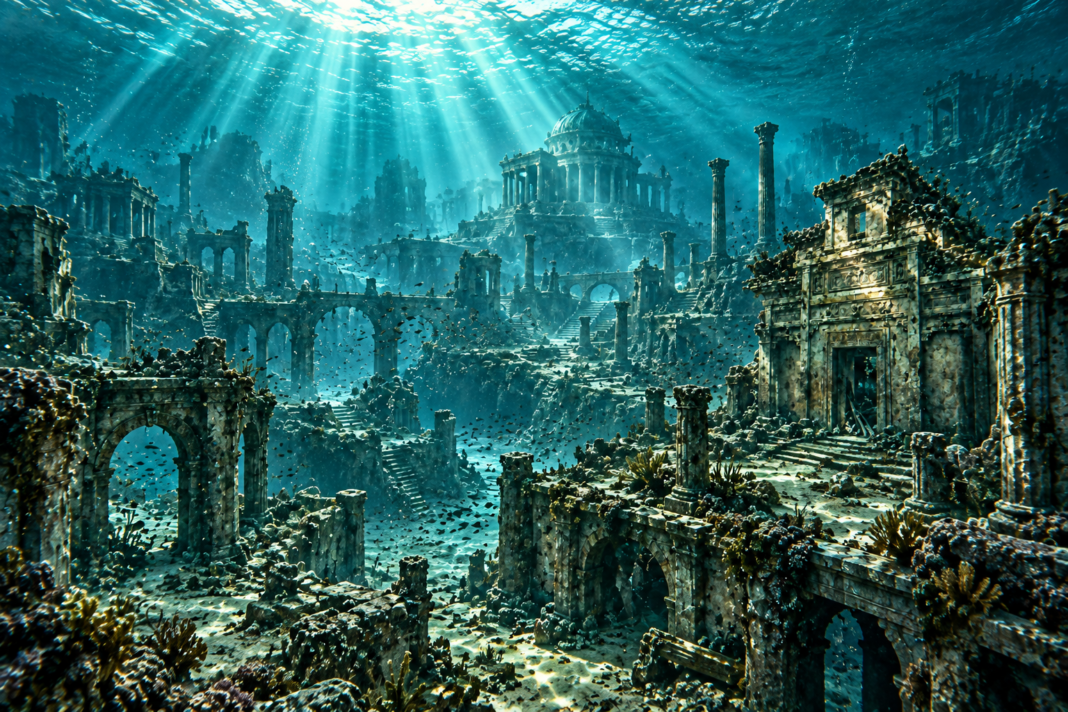
Quick answer: Bet Dwarka (also spelt Beyt Dwarka) is a small island in the Gulf of Kutch, about 2 km off Okha and around 30 km from Dwarka town in Gujarat. Hindus believe it was the home of Lord Krishna, where he welcomed his childhood friend Sudama. Its main shrine is the Shri Beyt Dwarkadhish Temple. Since February 2024, the island has been linked to the mainland by Sudarshan Setu, India’s longest cable-stayed bridge at about 2.32 km. The island is also home to the Hanuman Dandi temple, a Sikh gurdwara and important underwater archaeology sites.
An Island of Faith, Legend and History
Picture a small island rising from blue-green water. Seagulls wheel overhead. Pilgrims chant “Jai Dwarkadhish” as they walk towards a temple where, they believe, Lord Krishna once lived with his family. Meanwhile, beneath the waves nearby, archaeologists search for traces of settlements thousands of years old.
That’s Bet Dwarka. For centuries, reaching it meant a crowded boat ride across the sea. Today, a gleaming cable-stayed bridge carries you across in minutes. Yet the island still feels a world apart, with its quiet lanes, old temples and wide sea views.
In this complete guide, we cover everything you need to know about Bet Dwarka. First, we explain its legends and why it’s sacred. Next, we look at its history and underwater archaeology. Then, we walk you through its temples and other sights, including the new Sudarshan Setu. Finally, we cover the practical side: timings, how to reach, where to stay, what to eat, nearby places and tips.
A note on sources: We’ve drawn on official sources, published research and news reports. Also, many stories about Bet Dwarka come from faith and tradition rather than hard history. So, we make that difference clear as we go.
Bet Dwarka: Quick Facts
| Detail | Information |
|---|---|
| Also known as | Beyt Dwarka, Shankhodhar |
| Type | Island and pilgrimage site |
| Location | Gulf of Kutch, off Okha, Devbhumi Dwarka district, Gujarat |
| Size | About 8 km long and about 2 km wide on average (around 11 sq km) |
| Distance from Okha | About 2 km across the water |
| Distance from Dwarka town | About 30 km by road |
| Associated with | Lord Krishna and his friend Sudama |
| Main temple | Shri Beyt Dwarkadhish Temple |
| Bridge | Sudarshan Setu, about 2.32 km, opened 25 February 2024 |
| Population | Around 15,000 as per the 2011 census |
| Archaeology | Late Harappan finds and a protective wall dated to around 1500 BCE |
| Best time to visit | October to March |
| Nearest railway station | Okha |
| Nearest airports | Jamnagar and Porbandar |
What Is Bet Dwarka?
Bet Dwarka is a small island at the mouth of the Gulf of Kutch, off the north-western tip of Gujarat. It sits just across the water from the port town of Okha.
For Hindus, it’s a deeply sacred place. According to tradition, it was part of Lord Krishna’s ancient kingdom of Dwarka. Many believe it was his personal residence, while the main city stood on the mainland. So, pilgrims who visit the famous Dwarkadhish Temple in Dwarka town usually come to Bet Dwarka too. In fact, many feel their Dwarka pilgrimage isn’t complete without it.
But Bet Dwarka isn’t only about faith. It’s also an important site for archaeology, with finds going back thousands of years. On top of that, it’s now home to a landmark bridge and quiet beaches that draw nature lovers.
What Does “Bet” or “Beyt” Mean?
In Gujarati, bet (બેટ) simply means “island”. So, “Bet Dwarka” means “Dwarka island”. You’ll see it spelt in several ways, such as Bet Dwarka, Beyt Dwarka and even Bet Dwaraka. They all refer to the same place.
The island is also known as Shankhodhar or Shankhoddhar. This name is linked to the shankh, or conch shell. According to one explanation, the island was once rich in conch shells. According to another, the name comes from a legend about the demon Shankhasura, which we explain below.
Where Is Bet Dwarka?
Bet Dwarka lies in Devbhumi Dwarka district, in the Saurashtra region of Gujarat. It sits in the Gulf of Kutch, just north-east of Okha, a port town at the tip of the Okhamandal peninsula.
- Okha: About 2 km across the water, now crossed by Sudarshan Setu.
- Dwarka town: About 30 km by road.
- Jamnagar: About 150 km by road.
- Ahmedabad: Roughly 460 to 470 km by road.
The island is long and narrow, running from north-east to south-west. It’s about 8 km long and around 2 km wide on average. The main temple area sits near the western end, close to the old boat jetty and the bridge.
The Legend of Bet Dwarka
To understand why millions of pilgrims come here, you need to know the stories. These come from Hindu texts, such as the Mahabharata and the Puranas, and from local tradition.
Krishna’s Kingdom of Dwarka
According to Hindu tradition, Lord Krishna left Mathura and founded a new kingdom on the western coast. This kingdom was called Dwarka, often translated as the “gateway” or “city of many gates”. It was said to be a city of great beauty and wealth.
Many believe that the city stretched across the mainland and the islands nearby. In this view, Bet Dwarka served as Krishna’s personal home, where he lived with his family. Meanwhile, the main city and royal court stood on the mainland, near today’s Dwarka town.
The City Beneath the Sea
The Mahabharata tells that after Krishna left the world, the sea rose and swallowed Dwarka. This powerful story has fascinated people for centuries. It’s also one reason why archaeologists have searched the waters off Dwarka and Bet Dwarka for ancient remains.
Of course, faith and archaeology are different things. Archaeologists look for physical evidence and dates, while the legend belongs to religious tradition. Still, the two often meet in interesting ways, as we’ll see later.
Krishna and Sudama: The Story of True Friendship
The best-loved story linked to Bet Dwarka is the tale of Krishna and his childhood friend Sudama.
Krishna and Sudama studied together as boys at the ashram of their teacher, Sage Sandipani. They became close friends. However, their lives went in very different directions. Krishna became a great king. Meanwhile, Sudama remained a poor Brahmin, struggling to feed his family.
One day, Sudama’s wife urged him to visit his old friend and ask for help. Sudama was shy and poor. He had nothing to offer the king except a small bundle of beaten rice, called poha or chawal, tied in an old cloth.
When Sudama reached Krishna’s palace, Krishna ran to greet him with great joy. He washed Sudama’s feet, seated him with honour and treated him like royalty. Then, he found the little bundle of rice and ate it happily, as if it were the finest feast.
Sudama was so moved that he never asked for anything. Yet, when he returned home, he found that his hut had turned into a fine house, and his family’s poverty had ended. Krishna had understood his friend’s needs without a single word.
According to tradition, this meeting took place at Bet Dwarka. So, the island is closely linked with friendship, humility and devotion. That’s why many pilgrims offer rice here, in memory of Sudama’s humble gift.
Krishna’s Life in Brief
To feel the meaning of Bet Dwarka, it helps to know Krishna’s story. Here it is in short, as told in Hindu tradition.
Krishna was born in a prison cell in Mathura. His wicked uncle, King Kamsa, feared a prophecy that this child would kill him. So, on the night of his birth, Krishna’s father carried him across the Yamuna River to Gokul. There, he grew up with Nanda and Yashoda.
As a child and young man in Gokul and Vrindavan, Krishna was playful and full of mischief. He stole butter, played the flute and danced with the gopis. Yet he also protected the people. For example, he lifted Govardhan Hill to shelter them from a storm.
Later, Krishna returned to Mathura and defeated Kamsa. After that, he became a leader of the Yadavas. Then, facing constant attacks, he moved his people west to the coast and founded Dwarka. From there, he played a key role in the great war of the Mahabharata. On the battlefield of Kurukshetra, he spoke the Bhagavad Gita to Arjuna. Finally, after many years, he left the world, and, according to the story, the sea swallowed Dwarka.
Why Krishna Moved to Dwarka
According to the stories, Mathura faced repeated attacks from King Jarasandha of Magadha. To protect his people from endless war, Krishna chose to leave. He led the Yadavas west and built a new, safe city by the sea.
Because he left the battle rather than keep fighting, Krishna is sometimes lovingly called Ranchhod or Ranchhodrai, meaning “the one who left the battlefield”. In Gujarat, this name is very popular. In fact, many temples across the state worship Krishna as Ranchhodrai. So, the idea of Krishna as a wise leader who chose peace is deeply rooted here.
Krishna’s Queens and the Rukmini Temple
According to tradition, Krishna had eight principal queens. The chief among them was Rukmini. Others included Satyabhama and Jambavati. Many pilgrims believe that the queens lived with Krishna at Bet Dwarka.
Interestingly, Rukmini’s main temple stands apart, a little outside Dwarka town. A popular legend explains why. Once, Krishna and Rukmini invited the fiery sage Durvasa to a meal. On the way, Rukmini grew thirsty, and Krishna brought water for her. However, she drank before offering it to the sage. Durvasa was angered and cursed her to live apart from Krishna. So, her temple stands on its own today. It’s a story many local guides love to tell.
Dwarka in Ancient Texts
Dwarka appears in several ancient Hindu texts. For example, the Mahabharata describes the city and its fate. Also, the Harivamsa and the Bhagavata Purana tell of Krishna’s life there. In some texts, it’s also called Dvaravati.
These texts describe a grand, wealthy city with many gates, fine buildings and busy harbours. Of course, they were written as sacred literature, not as maps or history books. Still, they have shaped how millions of people imagine Dwarka and Bet Dwarka.
Understanding Pushtimarg Worship
Worship at the Bet Dwarka temple follows the Pushtimarg tradition, set up by the saint Vallabhacharya in the 15th and 16th centuries. It’s a path of loving devotion, where Krishna is served with care, like a dear family member.
In Pushtimarg temples, the day is divided into eight darshans, or viewings. They usually go like this.
- Mangala: The early morning waking.
- Shringar: Krishna is dressed and decorated.
- Gwal: Linked with Krishna taking the cows to graze.
- Rajbhog: The main midday meal offering.
- Utthapan: Waking after the afternoon rest.
- Bhog: An afternoon food offering.
- Sandhya Aarti: The evening lamp ceremony.
- Shayan: Preparing for the night.
Between these darshans, the doors close. That’s why the temple may seem to open and close often. So, if you arrive during a gap, just wait a little.
How to Do Darshan: Step by Step
- Arrive early. First, reach before the doors open for your chosen darshan.
- Deposit your phone. Next, leave phones and bags at the counter.
- Remove your shoes. Then, leave them at the shoe stand.
- Buy offerings, if you like. Rice, flowers or sweets are common.
- Join the queue. Men and women may queue separately.
- Offer your prayers. Keep it calm and move on to let others see.
- Take prasad. Finally, collect prasad, if it’s offered, and meet your group.
Imagining Sudama’s Journey
This is an imagined scene, based on the traditional story. It’s here to help you feel the tale, not as a record of real events.
Sudama walks for days. His feet ache, and his clothes are worn. Tucked under his arm is a small cloth bundle of beaten rice. It’s all he has. As he nears the sea, he sees the shining walls of Dwarka. His heart beats fast. Will his old friend even know him now?
At the palace gate, the guards look at him with doubt. But word reaches Krishna. At once, the king runs out, barefoot. He hugs Sudama tight. Then, he leads him inside, seats him on his own throne and washes his dusty feet.
Sudama feels shy. He hides the little bundle. But Krishna spots it and laughs with joy. He opens it and eats a handful of rice, as if it were the finest sweet. Tears fill Sudama’s eyes. He came to ask for help, yet he can’t say a word. In the end, he doesn’t need to.
Lessons From the Krishna and Sudama Story
The story of Krishna and Sudama is loved across India. That’s because its lessons are simple and timeless.
- True friends don’t change with money. Krishna became a king, yet he never forgot his poor friend.
- A small gift given with love is precious. Sudama’s rice meant more than gold.
- Help can come without asking. Krishna understood Sudama’s needs in silence.
- Humility is a strength. Sudama’s pride didn’t stop him from seeking his friend.
- Welcome guests with honour. Krishna treated Sudama like a king.
So, when you offer a handful of rice at Bet Dwarka, you’re joining in this old lesson of love and friendship.
What Your Day Will Feel Like
Never been before? Here’s what a typical visit feels like.
First, you drive north from Dwarka, past salt pans, fields and small villages. Soon, the tall towers of Sudarshan Setu appear. As you cross, the sea opens up on both sides. The wind is strong, and the water sparkles.
On the island, you park near the temple area. Lanes are lined with stalls selling rice, flowers, sweets and religious items. Then, you drop off your phone and join the queue. The crowd hums with chants of “Jai Dwarkadhish”. Inside, the air feels thick with devotion. You get a few moments to see the deity and say a prayer.
After that, you head out to other shrines. At Hanuman Dandi, the sea surrounds you, and it’s calm. At the gurdwara, you’re welcomed with a warm smile and perhaps a meal. Finally, as the sun drops, you look back at the bridge from Abhay Mata’s hill. It’s a day you won’t forget.
Set the Right Expectations
Bet Dwarka is a busy pilgrimage site, not a quiet resort. So, it helps to know what to expect.
- Crowds: Weekends and festivals are very busy.
- Queues: Darshan lines can be long and tightly packed.
- Simple facilities: Toilets, food and seating are basic.
- Heat and wind: The island is sunny and breezy most of the year.
- Change: With the bridge, the island is changing fast, so some details may differ from older guides.
That said, most visitors leave deeply moved. So, go with patience, and the experience will reward you.
Who Will Love Bet Dwarka Most?
- Krishna devotees: It’s one of the holiest places linked with him.
- Families: Elders value the pilgrimage, and kids love the bridge and the sea.
- History fans: The island’s archaeology is fascinating.
- Sikh pilgrims: The gurdwara of Bhai Mohkam Singh is a special stop.
- Nature lovers: Quiet shores, birds and marine life await.
- Photographers: The bridge and sea views are superb.
The Legend of Shankhasura and “Shankhodhar”
Another local legend explains the name Shankhodhar. According to this story, a demon called Shankhasura lived in the sea here. Lord Vishnu, in some tellings as his fish avatar, Matsya, or in others through Krishna, defeated the demon. So, the island came to be linked with the conch, or shankh, and with the victory over Shankhasura.
Today, a small temple called Shankh Narayan Mandir on the island is linked with this story. It sits beside a sacred pond, and devotees visit it as part of their darshan.
Bet Dwarka in Hindu Pilgrimage
Dwarka holds a very special place in Hinduism. For one thing, it’s one of the Char Dham, the four holiest pilgrimage sites set out by Adi Shankaracharya, along with Badrinath, Puri and Rameswaram. For another, it’s one of the Sapta Puri, the seven sacred cities of ancient India.
Bet Dwarka is closely tied to this holy status. Pilgrims usually visit the Dwarkadhish Temple (Jagat Mandir) in Dwarka town first. Then, they travel to Bet Dwarka. On the way, many also stop at the Nageshwar Jyotirlinga, one of the twelve Jyotirlingas of Lord Shiva, and at Gopi Talav. Together, these form a classic pilgrimage circuit.
For more sacred sites across the state, read our guide to the famous temples in Gujarat.
The History of Bet Dwarka
Beyond the legends, Bet Dwarka has a long, real history. Archaeology shows that people lived here thousands of years ago. Later, it became a centre of worship and trade.
Ancient Settlements
Excavations and underwater surveys have found signs of human settlement on and around the island going back to the second millennium BCE. In other words, people were living here around 3,500 years ago. These finds link Bet Dwarka with the late phase of the Harappan (Indus Valley) Civilisation, much like the port town of Lothal near Ahmedabad.
Trade Across the Sea
Bet Dwarka’s location made it a natural stop for sailors. Over the centuries, boats sailing along the Gujarat coast passed this way. In fact, archaeologists have found stone anchors and signs of shipwrecks in the waters nearby. Some finds even point to trade links with the Roman world, roughly 2,000 years ago.
Temples and Pilgrims
The temples you see on the island today are much younger than its ancient settlements. Many of the main shrines were built around the end of the 18th century, according to available records. Over time, the island grew into a major stop for pilgrims visiting Dwarka.
Underwater Archaeology at Bet Dwarka
Bet Dwarka is one of the most important places in India for marine archaeology. Here’s what we know.
The 1980s Discoveries
In the 1980s, the marine archaeologist S.R. Rao, who had earlier led the excavations at Lothal, worked with the National Institute of Oceanography (NIO) to study Dwarka and Bet Dwarka. Their work produced several striking finds on the island.
- A protective wall: In 1982, researchers found a wall about 580 m long, dated to around 1500 BCE.
- A Late Harappan seal: A seal of a style linked to the late Harappan period.
- An inscribed jar: Pottery with written marks.
- A coppersmith’s mould: Evidence of metalworking on the island.
- A copper fish-hook: A reminder that fishing was part of daily life.
Together, these finds show that Bet Dwarka was a working settlement, with craftsmen, fishermen and trade, well over 3,000 years ago.
Shipwrecks and Stone Anchors
The waters around Bet Dwarka also hold the remains of old ships. Divers have found stone anchors of different shapes and periods. Some anchors are similar to those used across the ancient Mediterranean and West Asia. As a result, they suggest that Bet Dwarka was part of a wide sea-trade network over many centuries.
The ASI’s New Underwater Exploration (2025)
The story isn’t over. In February 2025, the Archaeological Survey of India (ASI) began a fresh round of underwater exploration off Dwarka and Bet Dwarka. According to DD News, the work was led by Prof. Alok Tripathi, Additional Director-General (Archaeology), with a five-member team that included several women archaeologists. The team explored the Gomti Creek near Dwarka and the waters around Bet Dwarka.
This new work builds on earlier ASI surveys in the 1980s and between 2005 and 2007, which found sculptures and stone anchors. So, the coming years may reveal much more about the island’s past.
Faith and Science
Some people see these finds as proof of Krishna’s Dwarka. Others see them as evidence of ordinary coastal settlements and trade. In truth, archaeology can tell us when people lived here and what they did. However, it can’t prove or disprove matters of faith. So, it’s best to enjoy both: the deep devotion of pilgrims and the careful work of scientists.
Shri Beyt Dwarkadhish Temple
The heart of Bet Dwarka is the Shri Beyt Dwarkadhish Temple. For most pilgrims, this is the main reason to visit.
What Makes It Special
The temple is dedicated to Lord Krishna as Dwarkadhish, the “King of Dwarka”. According to tradition, it stands where Krishna lived with his family. So, for devotees, visiting here feels like visiting Krishna’s own home.
The temple complex is more like a palace than a single shrine. It has several shrines within it. By most accounts, these include shrines linked to Krishna’s queens. Also, the buildings have a traditional, fort-like look, with courtyards, carved doorways and old wooden details.
The Pushtimarg Connection
The temple is closely linked with the Pushtimarg tradition, founded by the saint Vallabhacharya. In this tradition, Krishna is worshipped with great love, as if serving a living child or king. So, darshan follows set times through the day, with different offerings, clothes and decorations at each slot.
Also on the island, you’ll find a Vaishnav Mahaprabhuji Bethak, a seat linked with Vallabhacharya. Followers of Pushtimarg visit it as an important stop.
Offering Rice in Memory of Sudama
Because of the Sudama story, many devotees offer rice at the temple. It’s a simple, humble offering that recalls Sudama’s gift of beaten rice to Krishna. You’ll often find rice for offering sold near the temple.
Temple Timings
Timings follow the darshan schedule and can change on festivals. As a rough guide, recent listings show:
- Morning: About 7:30 AM to 1 PM
- Evening: About 4:30 PM to 8 PM
Within these hours, the doors may close for short breaks between darshan slots. So, check the latest timings locally, or call the temple helpline, before you plan your day.
Rules and Tips for Darshan
- Phones: Mobile phones aren’t allowed inside. So, deposit them at the counter near the entrance.
- Queues: Men and women often queue separately. So, agree on a meeting point with your group.
- Dress: Wear modest clothes that cover shoulders and knees.
- Shoes: Remove them before entering.
- Crowds: Weekends, holidays and festivals get very busy. So, come early on a weekday if you can.
- Time needed: General darshan usually takes 20 to 30 minutes, but it can take much longer on busy days.
- Map: Open map
Shri Keshavraiji Temple
Another important Krishna temple on the island is the Shri Keshavraiji Temple. It’s closely linked with the Pushkarna Brahmin community, who worship Keshavraiji as their family deity. Bhatia devotees from Sindh, Kutch, Rajasthan, Gujarat and Punjab also come here.
Interestingly, the temple keeps old registers of visiting devotees. Some of these handwritten records go back around 250 years. So, families can sometimes trace the names of ancestors who visited long ago.
Other Temples and Sacred Sites on the Island
Beyond the main temple, Bet Dwarka has several other sacred places. Many pilgrims visit them all.
Makardhwaj Hanuman Mandir (Hanuman Dandi)
This temple sits near the far end of the island, about 5 km from the main temple area. It’s special because it’s one of the rare temples where Lord Hanuman is worshipped together with his son, Makardhwaj.
According to legend, after Hanuman burned Lanka, he dipped into the sea to cool his burning tail. A drop of his sweat fell into the water and was swallowed by a great fish, or makara. From this, Makardhwaj was born. Later, father and son met. So, this temple honours their bond.
The temple is calm and surrounded by the sea. Visitors say it’s especially peaceful in the early morning. Also, some mention that tea and poha are served to visitors in the morning.
- Timings: About 5 AM to 10 PM
- Map: Open map
Gurudwara Bhai Mohkam Singh Ji
Bet Dwarka is also sacred to Sikhs. It’s the birthplace of Bhai Mohkam Singh, one of the Panj Pyare, the “Five Beloved Ones”. In 1699, on Vaisakhi, Guru Gobind Singh initiated the Panj Pyare at Anandpur Sahib, marking the birth of the Khalsa. So, this gurdwara honours a key figure in Sikh history.
Sikh tradition also holds that Guru Nanak Dev visited Bet Dwarka. Today, the gurdwara offers langar (free meals) and rooms for visitors. Also, visitors often receive a free booklet on its history.
- Map: Open map
Shankh Narayan Mandir and Shankh Talav
This small temple sits beside a sacred pond. It’s linked with the legend of Shankhasura and the name Shankhodhar. Although it’s less known, devotees consider it an important stop to complete their darshan.
- Map: Open map
Abhay Mata Temple
Abhay Mata Temple stands on a small hill near the parking area. It’s quiet and less known. Best of all, it offers a lovely view of Sudarshan Setu and the sea. So, it’s a great spot for photos, especially in the evening.
- Timings: About 6 AM to 8 PM
- Map: Open map
Sudarshan Setu: India’s Longest Cable-Stayed Bridge
For centuries, the only way to reach Bet Dwarka was by boat. That changed on 25 February 2024, when Prime Minister Narendra Modi opened Sudarshan Setu. The bridge links Okha on the mainland with Bet Dwarka.
Key Facts
| Detail | Information |
|---|---|
| Total length | About 2,320 m (2.32 km) |
| Main span | 500 m, the longest cable-stayed main span in India |
| Width | About 27.2 m |
| Lanes | Two lanes each way, plus footpaths on both sides |
| Footpaths | About 2.5 m wide on each side |
| Solar power | Solar panels over the footpaths, about 1 MW |
| Cost | About ₹979 crore |
| Builder | SP Singla Construction |
| Foundation stone | 7 October 2017 |
| Opened | 25 February 2024 |
A Bridge With a Spiritual Touch
Sudarshan Setu isn’t just a road. Along its footpaths, you’ll see images of Lord Krishna and verses from the Bhagavad Gita. So, walking across it feels a little like a pilgrimage in itself. Also, the name comes from the Sudarshan Chakra, Krishna’s divine discus.
Why It Matters
Before the bridge, pilgrims crowded onto boats from the Okha jetty. The boats were often packed, and weather or tides could delay trips. Now, cars, buses and walkers can cross at any time. As a result, the bridge has made life easier for island residents and for the huge number of pilgrims who visit each year.
Walking the Bridge
Many visitors love to walk at least part of the bridge. The views of the Gulf of Kutch are wonderful, especially at sunrise and sunset. However, it’s long and exposed to sun and wind. So, carry water and a hat, and don’t linger on the roadway.
- Map: Open map
Sudarshan Setu vs Sudama Setu: Don’t Get Confused
These two names sound alike, so visitors often mix them up.
- Sudarshan Setu: The large cable-stayed road bridge linking Okha and Bet Dwarka.
- Sudama Setu: A pedestrian bridge over the Gomti River in Dwarka town, near the Dwarkadhish Temple. Open map.
In short, Sudarshan Setu takes you to the island. Meanwhile, Sudama Setu is back in Dwarka town.
The Old Ferry From Okha
Before the bridge, boats ran from the Okha jetty to Bet Dwarka. The trip took about 20 to 30 minutes. Seagulls followed the boats, hoping for snacks, and many visitors remember the ride fondly.
Since the bridge opened, the public ferry has largely stopped, according to recent visitors. However, local boat operators may still offer rides at times. So, if you’d like a boat trip for the view, ask locally in Okha.
- Okha–Bet Dwarka jetty area: Open map
Beaches and Nature on Bet Dwarka
Bet Dwarka isn’t only temples. The island also has quiet beaches, clear water and rich marine life.
Dunny Point
Dunny Point sits on a remote stretch of the island’s coast. It’s known for clean water, open sands and a sense of total calm. At low tide, visitors spot crabs, starfish and other small sea creatures. Also, some lucky visitors have seen dolphins offshore.
The area has been used for eco-camping in tents. However, it’s remote, with little or no electricity or mobile network. So, go with a local guide or an organised camp, and carry water and supplies.
- Map: Open map
Marine Life and Birds
The Gulf of Kutch is rich in marine life. Around Bet Dwarka, you may see seagulls, terns and other seabirds. Also, the shallow waters are home to crabs, small fish and other creatures. Dolphin sightings have been reported too.
Please enjoy the wildlife from a distance. Don’t feed the gulls chips or snacks, since this food harms them. Also, don’t collect shells, corals or live creatures from the shore.
Bet Dwarka in Later History
After ancient times, Bet Dwarka’s story continued. The wider region, called Okhamandal, was long home to local communities, including the Vaghers, who were known as skilled sailors.
In the 19th century, Okhamandal came under the rule of the Gaekwads of Baroda. Around 1857 to 1859, local Vagher leaders rose against the new order. The fighting reached Dwarka and Bet Dwarka, and British forces took part in putting down the revolt. So, the peaceful island you see today also has a history of struggle.
After India’s independence, the region became part of Saurashtra, and later of Gujarat. Then, in 2013, Devbhumi Dwarka became a separate district. Today, Bet Dwarka is part of it.
Life on the Island Today
Bet Dwarka isn’t just a temple site. Thousands of people live here. Many families depend on fishing, while others work in shops, transport and services for pilgrims.
The bridge has changed daily life a lot. For example, residents can now reach hospitals, schools and markets on the mainland much more easily. Also, goods arrive faster and cheaper. However, more visitors also bring more traffic and new pressures. So, the island is still finding its balance between old and new.
The Gulf of Kutch: A Sea Full of Life
Bet Dwarka sits at the mouth of the Gulf of Kutch, one of India’s richest marine areas. Further east, near Jamnagar, lies the Marine National Park, set up in 1982 as India’s first marine national park.
These waters are home to coral reefs, sea grasses, mangroves and many kinds of fish. Also, you may see dolphins, sea turtles and countless birds. Some rare animals, like dugongs, have been recorded in the wider region too. So, the sea around Bet Dwarka is a treasure, not only for pilgrims but also for nature.
How Sudarshan Setu Works: Engineering Made Simple
Sudarshan Setu is a cable-stayed bridge. So, what does that mean?
In a cable-stayed bridge, tall towers, called pylons, rise from the water. Then, strong steel cables run straight from the towers down to the bridge deck. These cables hold up the deck, like a giant fan of strings.
This is different from a suspension bridge, like San Francisco’s Golden Gate. In a suspension bridge, big main cables hang in a curve between towers. Then, smaller cables drop down from them to hold the road.
Cable-stayed bridges are strong and elegant. They also suit long spans over water. At Sudarshan Setu, the main span between towers is 500 m. That’s the longest of its kind in India. As a result, boats can pass under it, while cars cross above.
Sea and Weather Safety
- Strong winds: The bridge and coast can get very windy. So, hold on to hats and small children.
- Tides: The sea rises and falls a lot here. Don’t wander far on the shore at low tide without checking when the water returns.
- Currents: Don’t swim at unguarded beaches on the island.
- Heat: In summer, the sun is harsh. So, drink water often.
- Monsoon: Heavy rain and rough seas can affect plans. Check the weather before you go.
Reaching Dwarka and Okha From Major Cities
| From | Best way |
|---|---|
| Ahmedabad | Overnight train to Dwarka or Okha, or drive with a stop |
| Rajkot | Drive or train, about 4 to 5 hours |
| Jamnagar | Drive, about 2.5 to 3 hours |
| Mumbai | Direct train to Dwarka or Okha, or fly to Jamnagar |
| Delhi and North India | Direct trains to Okha run from several cities, or fly to Jamnagar or Rajkot |
Train routes and schedules change. So, always check the latest timetable before you plan.
How to Reach Bet Dwarka
Most visitors reach Bet Dwarka from Dwarka town or Okha. Here’s how to get there.
By Road
Bet Dwarka is about 30 km from Dwarka town. First, drive north towards Okha. Then, cross Sudarshan Setu to the island. The drive takes around 45 minutes to an hour, depending on traffic and stops.
Many visitors hire a taxi or auto for a half-day tour. These tours usually cover Nageshwar Jyotirlinga, Gopi Talav, Rukmini Temple and Bet Dwarka. Also, state and private buses run between Dwarka and Okha.
By Train
Okha is the nearest railway station. It’s the last station on this line, and it has trains from many parts of India. From Okha station, Bet Dwarka is a short drive across the bridge. Alternatively, you can get off at Dwarka station, then take a cab or bus.
By Air
The nearest airports are at Jamnagar and Porbandar. From either, you can take a taxi to Dwarka and Bet Dwarka. Jamnagar usually has more flight options. Also, Rajkot and Ahmedabad have bigger airports, but they’re much further away.
From Ahmedabad
Bet Dwarka is roughly 460 to 470 km from Ahmedabad by road. So, most people from Ahmedabad take an overnight train to Dwarka or Okha, or they drive in a day with stops. Alternatively, fly to Jamnagar and drive from there. For ideas before you leave the city, see our guide to the tourist places in Ahmedabad.
Getting Around the Island
Bet Dwarka is small, but the sights are spread out. The main temple sits near the western end, while Hanuman Dandi is near the far end. So, you’ll need transport for most of the island.
- Your own car or cab: The easiest option, now that the bridge is open.
- Local autos: Available near the temple area for short trips.
- Walking: Fine around the temple area, but the island is too long to walk end to end comfortably.
A Simple Route Around Bet Dwarka
- Cross Sudarshan Setu. First, enjoy the sea views. If you can, stop briefly for photos where it’s allowed.
- Visit the Dwarkadhish Temple. Next, deposit your phone and join the darshan queue.
- See the nearby shrines. Then, visit the Keshavraiji Temple, Shankh Narayan Mandir and the Mahaprabhuji Bethak.
- Stop at the gurdwara. After that, visit Gurudwara Bhai Mohkam Singh Ji.
- Drive to Hanuman Dandi. Visit the rare temple of Hanuman and Makardhwaj.
- Climb to Abhay Mata Temple. Finally, enjoy the view of the bridge and the sea.
If you have extra time and a guide, you can also head to the quieter coast around Dunny Point.
A One-Day Dwarka and Bet Dwarka Plan
| Time | Plan |
|---|---|
| 6:30 AM | Morning darshan at the Dwarkadhish Temple (Jagat Mandir), Dwarka |
| 8:30 AM | Breakfast near the temple |
| 9:30 AM | Rukmini Devi Temple |
| 10:30 AM | Nageshwar Jyotirlinga |
| 11:30 AM | Gopi Talav |
| 12:15 PM | Cross Sudarshan Setu to Bet Dwarka; darshan before the midday closure |
| 1:30 PM | Lunch or langar |
| 2:30 PM | Hanuman Dandi and other island shrines |
| 4:30 PM | Evening darshan at Bet Dwarka, or Abhay Mata for the view |
| 6:00 PM | Return to Dwarka for the evening aarti at Gomti Ghat |
Tip: Temple timings change through the day. So, many tour drivers plan the order to avoid closed slots. Ask your driver to help.
A Two-Day Plan
Day 1: Dwarka Town
- Morning: Dwarkadhish Temple (Jagat Mandir) and Gomti Ghat
- Afternoon: Sudama Setu and a walk through the old town
- Evening: Sunset and aarti by the Gomti
Day 2: Bet Dwarka and the Circuit
- Morning: Nageshwar, Gopi Talav and Bet Dwarka temples
- Afternoon: Hanuman Dandi and Abhay Mata
- Evening: Shivrajpur Beach for a calm sunset
Best Time to Visit Bet Dwarka
- October to March: The best time. The weather is pleasant, and sightseeing is comfortable.
- April to June: Hot and humid. So, plan temple visits early in the morning and late in the evening.
- July to September: The monsoon brings rain and rough seas. Roads stay open thanks to the bridge, but weather can still affect plans.
Also, avoid big festival days if you dislike crowds. On the other hand, if you want to feel the full energy of devotion, festivals are unforgettable.
Festivals at Bet Dwarka
- Janmashtami: Krishna’s birthday, usually in August or September, is the biggest festival. Temples are decorated, and midnight celebrations draw huge crowds.
- Holi and Phuldol: Colourful celebrations of spring, full of music and joy.
- Diwali and Annakut: Lamps light up the temples, and devotees offer a huge spread of food.
- Sharad Purnima: The full moon of autumn is special in Krishna worship.
- Vaisakhi (at the gurdwara): Sikh devotees mark the founding of the Khalsa, linked with Bhai Mohkam Singh.
Dates follow the Hindu and Sikh calendars, so they change each year. Also, expect very large crowds around these festivals.
Where to Stay
Most visitors stay in Dwarka town, which has the widest choice of hotels, dharamshalas and guesthouses. Some stay in Okha, which is closer to the island.
- Dwarka town: Best for first-time visitors, with many hotels near the temple and along the main roads.
- Okha: Handy for an early start to Bet Dwarka, with simpler options.
- On the island: Options are limited. The gurdwara offers rooms for visitors, and some dharamshalas exist. Also, eco-camps near Dunny Point have operated at times.
- Near Shivrajpur: A few resorts sit along the coast, good for a beach break.
Book early around Janmashtami, Diwali and long weekends.
Food at Bet Dwarka
Bet Dwarka is a pilgrimage island. So, food is simple and vegetarian.
- Temple prasad: Many visitors take prasad after darshan.
- Langar: The gurdwara serves free meals to all.
- Small eateries: Near the temple, stalls sell tea, snacks, thalis and sweets.
- Dwarka and Okha: For more choice, eat in town before or after your visit.
Also, carry water, especially in summer.
Places to Visit Near Bet Dwarka
Dwarkadhish Temple (Jagat Mandir), Dwarka
The grand Dwarkadhish Temple in Dwarka town is one of India’s most famous Krishna temples and a Char Dham site. Its tall spire, flag and carved stone make it unforgettable. Most pilgrims visit it before Bet Dwarka. Open map.
Nageshwar Jyotirlinga
Nageshwar is one of the twelve Jyotirlingas of Lord Shiva. It sits between Dwarka and Bet Dwarka. Outside, a huge seated Shiva statue, about 25 m tall, dominates the skyline. Inside, the Jyotirlinga rests in an underground sanctum. Open map.
Gopi Talav
According to tradition, this is where the gopis of Vrindavan met Krishna for the last time. Its soft, yellow clay is known as gopi chandan and is used by devotees for tilak. It’s a quiet stop on the way to Bet Dwarka. Open map.
Rukmini Devi Temple
This beautifully carved temple is dedicated to Rukmini, Krishna’s chief queen. It stands a short drive from Dwarka town. Its outer walls are covered in fine sculptures. Open map.
Shivrajpur Beach
Shivrajpur is one of India’s Blue Flag certified beaches, known for its clean sand and clear water. It’s about 12 km from Dwarka. So, it’s a lovely place to relax after temple visits. There’s a small entry fee, and water activities may be available. Open map.
Okha
Okha is a working port town at the tip of the peninsula. It’s the gateway to Bet Dwarka and has a railway terminus. It’s worth a quick look for its harbour and fishing boats.
More About Nageshwar Jyotirlinga
Most pilgrims stop at Nageshwar on the way to Bet Dwarka. So, it’s worth knowing a little more about it.
Nageshwar means “Lord of Serpents”, a name for Shiva. According to legend, a demon called Daruka troubled a devotee of Shiva here. In response, Shiva appeared and defeated the demon. That’s why the area is linked with the name Darukavan, or the forest of Daruka.
Today, the temple is known for two things. First, there’s the huge seated statue of Shiva outside, which you can see from far away. Second, the sacred Jyotirlinga lies in an underground sanctum. Also, many devotees offer small metal serpent figures here. So, it’s a powerful stop for Shiva devotees.
Other Sights in Dwarka Town
Since you’ll likely stay in Dwarka, it’s worth exploring more of the town.
- Gomti Ghat: Steps lead down to where the Gomti River meets the sea. In the evening, it’s lively with pilgrims and aarti.
- Bhadkeshwar Mahadev: A Shiva temple on a rocky outcrop by the sea. At high tide, water surrounds it. Also, it’s a lovely spot for sunset.
- Gita Mandir: A calm temple with verses from the Bhagavad Gita on its walls.
- Dwarka Lighthouse: On clear days, it offers wide views of the coast, when open to visitors.
- Sudama Setu: Walk across the Gomti for views of the town and the Dwarkadhish Temple.
Evening Aarti at Gomti Ghat
One of the best ways to end a Bet Dwarka day is back in Dwarka town. As the sun sets, pilgrims gather at Gomti Ghat. Soon, bells ring, lamps glow and chants fill the air. Meanwhile, the flag of the Dwarkadhish Temple flutters high above. So, even if you’re tired, don’t miss this moment. It’s simple, joyful and full of devotion.
Okha: The Gateway Town
Okha sits at the very tip of the Okhamandal peninsula. It’s a working port, with fishing boats, jetties and a small harbour. Also, it’s the end of the railway line. So, many long-distance trains start and end here.
For visitors, Okha is mainly a gateway to Bet Dwarka. However, it’s worth a short stop. Watch the fishing boats come in, or enjoy a cup of tea by the harbour. Also, simple hotels and guesthouses here make an early start to Bet Dwarka easy.
A Photo Walk on Sudarshan Setu
Want great photos of the bridge? Then try this plan.
- Go at golden hour. First, arrive around sunrise or an hour before sunset.
- Start on the Okha side. Next, capture the towers rising ahead of you.
- Look for details. Then, photograph the Gita verses and Krishna images along the footpath.
- Frame the cables. After that, shoot upwards through the fan of steel cables.
- Finish at Abhay Mata. Finally, climb the hill for a wide shot of the whole bridge.
Always stay on the footpath, and never stand on the roadway for photos.
Planning Around Temple Closures
The Bet Dwarka temple closes between darshans, and most notably around midday. So, a little planning saves time.
- Morning plan: Reach Bet Dwarka early for morning darshan. Then, see other shrines as the temple closes.
- Afternoon plan: Visit Nageshwar and Gopi Talav first. Next, reach Bet Dwarka for the evening darshan.
- Ask locally: Timings can shift on festivals. So, check at your hotel or with your driver.
Bet Dwarka for Solo Travellers
Travelling alone? Bet Dwarka is generally welcoming. For example, shared cabs and tours from Dwarka make it easy to join others. Also, the gurdwara is a friendly place to rest and eat. However, remote areas like Dunny Point have little network. So, don’t go there alone, and tell someone your plans.
Add a Stop in Jamnagar
If you fly into Jamnagar, or drive from Rajkot, the city is worth a short stop. For example, Lakhota Lake, with its old palace-fort, is lovely for an evening walk. Also, the Bala Hanuman Temple nearby is famous for its non-stop chanting of “Shri Ram, Jai Ram, Jai Jai Ram”, which devotees say has continued since 1964. Nature lovers can also plan a trip to the Marine National Park area, where guided visits at low tide can show corals and sea life. So, Jamnagar makes a good start or end to your Dwarka trip.
Names People Often Mix Up
- Dwarka, Gujarat vs Dwarka, Delhi: Delhi also has a large suburb called Dwarka. However, the sacred Dwarka and Bet Dwarka are in Gujarat.
- Bet Dwarka vs Beyt Dwarka: These are just two spellings of the same island.
- Dwarkadhish Temple vs Shri Beyt Dwarkadhish Temple: The first is the grand Jagat Mandir in Dwarka town. The second is the main temple on the island.
- Sudarshan Setu vs Sudama Setu: The first links Okha and the island. The second crosses the Gomti in Dwarka town.
Bet Dwarka vs Dwarka: What’s the Difference?
| Feature | Dwarka town | Bet Dwarka |
|---|---|---|
| Type | Mainland town | Island |
| Main temple | Dwarkadhish (Jagat Mandir) | Shri Beyt Dwarkadhish Temple |
| Link to Krishna | Seat of his kingdom | Believed to be his home |
| Key story | Krishna as king of Dwarka | Krishna welcomes Sudama |
| Access | By road and rail | Via Sudarshan Setu from Okha |
| Stay options | Many | Few |
In short, visit both. Together, they complete the Dwarka pilgrimage.
Before and After the Bridge
Sudarshan Setu has changed the Bet Dwarka trip in many ways. Here’s a quick look.
| Feature | Before the bridge | After the bridge |
|---|---|---|
| How to cross | Crowded boats from Okha jetty | Drive or walk across the bridge |
| Time to cross | About 20 to 30 minutes, plus waiting | A few minutes by car |
| Weather delays | Common in rough seas | Much rarer |
| Access for elders | Hard, with steps and boats | Much easier, by car |
| Night access | Very limited | Open round the clock |
| Goods for islanders | Slow and costly | Faster and cheaper |
However, some visitors miss the old boat ride, with its gulls and sea spray. So, if a local boat is running, it’s still a fun way to see the island from the water.
Bet Dwarka Through the Year
- October and November: The weather cools, and Diwali brings lights and crowds.
- December to February: The best time. Days are pleasant, and mornings can be cool, so carry a light shawl.
- March: Holi and Phuldol fill the temples with colour and music.
- April to June: Hot and humid. So, go early and rest at midday.
- July to September: The monsoon brings rain and rough seas. Also, Janmashtami often falls in August or September, drawing huge crowds.
Dos and Don’ts at Bet Dwarka
Do
- Start early and check darshan timings.
- Dress modestly and remove your shoes where asked.
- Respect queues and help elders.
- Try the langar at the gurdwara with gratitude.
- Carry water and stay in the shade when you can.
Avoid
- Carrying phones into the temple, since they aren’t allowed.
- Paying touts who promise “quick darshan”.
- Feeding the gulls or littering the shore.
- Swimming at unguarded spots.
- Stopping on the bridge roadway for photos.
Tips for Visiting Bet Dwarka
- Start early. Mornings are cooler and less crowded.
- Check darshan timings. The temple closes between slots.
- Leave phones in the car or at the counter. They aren’t allowed inside the temple.
- Dress modestly. Cover shoulders and knees.
- Carry water and a hat. The island is sunny and breezy.
- Keep cash handy. Some small shops and autos prefer it.
- Agree on a meeting point. Queues are often separate for men and women.
- Respect the sea. Don’t swim in unmarked areas, since currents can be strong.
- Don’t feed gulls. Snacks harm their health.
- Beware of touts. Only pay official fees, and ignore anyone promising “special darshan” for money.
Photography Tips
- Sudarshan Setu at golden hour: Sunrise and sunset light up the cables and the sea.
- From Abhay Mata Temple: Shoot the whole bridge from the hill.
- Temple exteriors: Photos inside aren’t allowed, but the outer lanes and doorways are colourful.
- Coastline: Low tide at Dunny Point shows rock pools and patterns in the sand.
- Be respectful: Ask before photographing people, especially during worship.
Visiting With Elders and Kids
Bet Dwarka is a family pilgrimage for many. So, a little planning helps.
- Elders: Choose weekday mornings to avoid long, crowded queues. Also, carry a small stool or ask about seating.
- Wheelchairs: The bridge and roads are smooth. However, temple lanes can be narrow and crowded. So, ask the temple office about help.
- Kids: Tell them the Sudama story before you go. Also, the bridge and the sea views are big hits with children.
- Everyone: Carry water, snacks and sun protection.
Budget: What a Trip Costs
A trip to Bet Dwarka can be very affordable. Temple darshan is free. Also, langar at the gurdwara is free. Your main costs are travel and stay.
- Travel: Trains to Dwarka or Okha are cheap. A cab for the local circuit costs more, but it’s easy to share.
- Stay: Dharamshalas are cheapest, while hotels range from budget to comfortable.
- Food: Simple vegetarian meals are inexpensive.
- Offerings: Rice, flowers and prasad are optional and usually modest.
Safety and Etiquette
- Follow all instructions from temple staff and police.
- Stay on footpaths when walking the bridge, and don’t stop on the roadway.
- Keep an eye on children near the water.
- Don’t litter, especially plastic, which harms marine life.
- Respect local customs and the privacy of island residents.
Your Bet Dwarka Packing List
- Modest, comfortable clothes
- Easy-to-remove footwear
- Hat, sunglasses and sunscreen
- Water bottles
- Light snacks
- Some cash
- A light shawl for early winter mornings
- A small bag for rice or flowers, if you plan to offer them
Questions Pilgrims Often Ask
Can I stay overnight on the island?
Yes, but options are limited. The gurdwara offers rooms, and there are some dharamshalas. However, most visitors stay in Dwarka or Okha.
Is there parking on Bet Dwarka?
Yes. There’s a parking area near the temple zone. On busy days, it can fill up, so arrive early.
Are there lockers for phones and bags?
Yes. There’s a deposit counter near the temple entrance. Keep your token safe.
Is there a dress code?
There isn’t a strict uniform, but modest clothing is expected. So, cover your shoulders and knees.
Can I walk across Sudarshan Setu?
Yes. The bridge has footpaths on both sides. However, it’s long and exposed to the sun and wind. So, plan for it, and stay off the roadway.
Myths and Facts About Bet Dwarka
- Myth: You still need a boat to reach Bet Dwarka. Fact: Since 2024, you can drive across Sudarshan Setu.
- Myth: Sudarshan Setu and Sudama Setu are the same. Fact: Sudarshan Setu links Okha and the island, while Sudama Setu is in Dwarka town.
- Myth: The temples are thousands of years old. Fact: The present temples are much younger, though the island’s settlements are very ancient.
- Myth: Archaeology has “proved” the legend. Fact: Finds show ancient settlement and trade, but faith and science answer different questions.
- Myth: Bet Dwarka is only for Hindus. Fact: It’s also sacred to Sikhs, thanks to the gurdwara of Bhai Mohkam Singh.
Bet Dwarka in Numbers
- Length: About 8 km.
- Average width: Around 2 km.
- Area: Roughly 11 sq km.
- Distance from Okha: Around 2 km across the water.
- Road distance from Dwarka town: Roughly 30 km.
- Sudarshan Setu: 2.32 km long.
- Main span: 500 m.
- Bridge cost: ₹979 crore.
- Ancient wall: 580 m, found in 1982.
- Daily darshans: 8 in Pushtimarg worship.
Revision Notes: 20 Key Points
- Bet Dwarka is an island in the Gulf of Kutch, Gujarat.
- “Bet” means island in Gujarati.
- It’s also called Shankhodhar.
- It lies about 2 km off Okha.
- It’s about 30 km by road from Dwarka town.
- It’s in Devbhumi Dwarka district.
- Hindus believe it was Lord Krishna’s home.
- Krishna welcomed his friend Sudama here, says tradition.
- Devotees offer rice in memory of Sudama.
- The main shrine is the Shri Beyt Dwarkadhish Temple.
- Worship follows the Pushtimarg tradition.
- Hanuman Dandi honours Hanuman and his son Makardhwaj.
- A gurdwara marks the birthplace of Bhai Mohkam Singh.
- S.R. Rao led marine archaeology here in the 1980s.
- A 580 m wall dated to about 1500 BCE was found in 1982.
- Finds include a late Harappan seal and a copper fish-hook.
- The ASI began new underwater exploration in 2025.
- Sudarshan Setu opened on 25 February 2024.
- It’s India’s longest cable-stayed bridge, about 2.32 km long.
- The best time to visit is October to March.
A Quick Guide to Key Terms
- Bet (Beyt): Gujarati for “island”.
- Dwarkadhish: “King of Dwarka”, a name for Krishna.
- Darshan: Seeing and being seen by the deity in worship.
- Prasad: Blessed food given after worship.
- Pushtimarg: A Krishna devotion path founded by Vallabhacharya.
- Bethak: A sacred seat linked with Vallabhacharya.
- Char Dham: Four holy pilgrimage sites, including Dwarka.
- Jyotirlinga: One of twelve sacred shrines of Lord Shiva.
- Langar: Free community meal at a gurdwara.
- Panj Pyare: The Five Beloved Ones of Guru Gobind Singh.
- Setu: Bridge.
Bet Dwarka Timeline
| Date | Event |
|---|---|
| Second millennium BCE | Settlement on the island, linked with late Harappan culture |
| Around 1500 BCE | Date given to a 580 m protective wall found on the island |
| Around 2,000 years ago | Signs of sea trade, including links with the Roman world |
| Late 18th century CE | Main temples built, according to available records |
| 1699 | Bhai Mohkam Singh becomes one of the Panj Pyare |
| 1980s | Major marine archaeology work by S.R. Rao and the NIO |
| 1982 | The 580 m wall is found |
| 2005–2007 | ASI underwater surveys off Dwarka |
| 7 October 2017 | Foundation stone of Sudarshan Setu laid |
| 25 February 2024 | Sudarshan Setu opens |
| February 2025 | ASI begins fresh underwater exploration |
Shopping and Souvenirs
You’ll find many small shops near the temple. Here’s what people usually buy.
- Prasad and sweets: Take some home for family and friends.
- Gopi chandan: The sacred yellow clay linked with Gopi Talav, used for tilak.
- Religious items: Pictures of Krishna, small idols, beads and malas.
- Tulsi malas: Bead necklaces made from holy basil wood.
- Local crafts: Colourful Saurashtra textiles and embroidery in Dwarka town.
However, please avoid buying shells, corals or anything taken from live sea creatures. These harm the fragile marine life of the Gulf of Kutch.
Be a Green Pilgrim
More visitors means more pressure on this small island. So, you can help keep it beautiful.
- Carry a reusable bottle. Refill it instead of buying new plastic ones.
- Say no to plastic bags. Carry a cloth bag for offerings.
- Use bins. Or take your rubbish back with you.
- Don’t feed birds. Chips and snacks make them sick.
- Leave shells and corals. They belong in the sea.
- Share rides. Fewer cars mean less traffic and pollution.
Extend Your Trip: Dwarka, Porbandar and Somnath
Got more time? Then turn your trip into a coastal Saurashtra circuit.
- Dwarka and Bet Dwarka: First, spend one or two days on the Krishna circuit.
- Porbandar: Next, drive south along the coast to Porbandar, the birthplace of Mahatma Gandhi. Visit Kirti Mandir, his family home.
- Somnath: Then, continue to Somnath, home to the first of the twelve Jyotirlingas, right by the sea.
This coastal drive is scenic and full of history. So, it’s a great way to see more of Gujarat. For more sacred sites, see our guide to the famous temples in Gujarat.
Explaining Bet Dwarka to Kids in Five Sentences
Bet Dwarka is a small island in the sea near Gujarat. People believe Lord Krishna lived here with his family long, long ago. One day, his poor friend Sudama came with a tiny bag of rice, and Krishna was so happy to see him. Now, a very long bridge takes cars and people across the sea to the island. There, you can visit temples, see the sea and spot birds and fish.
A Final Planning Checklist
- I’ve checked the latest darshan timings.
- I’m starting early to beat the heat and crowds.
- I know where I’ll leave my phone.
- I’m dressed modestly and comfortably.
- I’ve packed water, a hat and some cash.
- I’ve planned my stay in Dwarka or Okha.
- I know the difference between Sudarshan Setu and Sudama Setu.
Quick Recap
Let’s sum up. Bet Dwarka is a small island off Okha, in the Gulf of Kutch. Hindus believe Krishna lived here and welcomed his friend Sudama. So, pilgrims visit its temples and offer rice. The island also has a rare Hanuman temple and a gurdwara linked to the Panj Pyare. Beneath the waves, archaeologists have found signs of life from over 3,000 years ago. Since 2024, the long Sudarshan Setu bridge has made the trip quick and easy. Visit between October and March, start early, and take your time.
Frequently Asked Questions
What is Bet Dwarka famous for?
Bet Dwarka is famous as the island home of Lord Krishna, according to Hindu tradition, where he welcomed his friend Sudama. It’s known for the Shri Beyt Dwarkadhish Temple, Sudarshan Setu and its underwater archaeology.
Where is Bet Dwarka located?
Bet Dwarka is an island in the Gulf of Kutch, in Devbhumi Dwarka district, Gujarat. It lies about 2 km off Okha and about 30 km by road from Dwarka town.
What does Bet or Beyt mean?
In Gujarati, “bet” means island. So, Bet Dwarka means “Dwarka island”. It’s also called Shankhodhar.
How do I reach Bet Dwarka?
Drive or take a cab from Dwarka to Okha, then cross Sudarshan Setu to the island. The nearest railway station is Okha, and the nearest airports are Jamnagar and Porbandar.
Is the ferry to Bet Dwarka still running?
Since Sudarshan Setu opened in February 2024, the public ferry has largely stopped, according to recent visitors. Most people now cross by road. Local boats may still run at times, so ask in Okha.
How long is Sudarshan Setu?
Sudarshan Setu is about 2.32 km long, with a 500 m main span. It’s India’s longest cable-stayed bridge and was opened on 25 February 2024.
What are the Bet Dwarka temple timings?
As a rough guide, the Shri Beyt Dwarkadhish Temple is open from about 7:30 AM to 1 PM and 4:30 PM to 8 PM, with short breaks between darshan slots. Timings change on festivals, so check locally.
Are mobile phones allowed in Bet Dwarka temple?
No. Mobile phones aren’t allowed inside the temple. You can deposit them at the counter near the entrance.
Why do devotees offer rice at Bet Dwarka?
Many devotees offer rice in memory of Sudama, who brought beaten rice as a humble gift to Krishna. The story of their friendship is closely linked with Bet Dwarka.
What is Hanuman Dandi?
Hanuman Dandi, or Makardhwaj Hanuman Mandir, is a temple on Bet Dwarka where Lord Hanuman is worshipped with his son Makardhwaj. It’s one of very few such temples in India.
Is there a gurdwara at Bet Dwarka?
Yes. Gurudwara Bhai Mohkam Singh Ji marks the birthplace of Bhai Mohkam Singh, one of the Panj Pyare of Guru Gobind Singh. It offers langar and rooms for visitors.
What has been found underwater at Bet Dwarka?
Researchers have found a 580 m protective wall dated to around 1500 BCE, a late Harappan seal, an inscribed jar, a coppersmith’s mould, a copper fish-hook, stone anchors and signs of shipwrecks.
What is the best time to visit Bet Dwarka?
October to March is the best time, with pleasant weather. Janmashtami is the biggest festival, but it brings very large crowds.
How much time do I need for Bet Dwarka?
Plan at least half a day for Bet Dwarka. For the full Dwarka circuit, including Nageshwar, Gopi Talav and Rukmini Temple, plan one to two days.
What is the difference between Sudarshan Setu and Sudama Setu?
Sudarshan Setu is the road bridge linking Okha and Bet Dwarka. Sudama Setu is a pedestrian bridge over the Gomti River in Dwarka town.
Why Now Is a Great Time to Visit
There’s never been an easier time to see Bet Dwarka. For one thing, the bridge has made the trip quick, safe and open to all ages. For another, fresh underwater exploration may soon reveal new finds about the island’s past. Also, better roads and more hotels in the region make planning simpler. At the same time, the island still keeps its quiet, old-world charm. So, go soon, before it changes even more. You’ll get the best of both worlds: easy access and a timeless feel.
A Gentle Plan for Elders
Travelling with parents or grandparents? Then keep the day slow and simple. First, stay in Dwarka and rest well the night before. Next, drive to Bet Dwarka for the morning darshan on a weekday. After that, visit only one or two more shrines, such as the gurdwara and Hanuman Dandi. Then, return for lunch and a long rest. Finally, enjoy the evening aarti at Gomti Ghat from a comfortable spot. In short, less rushing means more joy.
The Bottom Line
Bet Dwarka is a place where faith, history and the sea meet. Here, pilgrims honour Krishna and remember his friendship with Sudama. Meanwhile, archaeologists uncover traces of people who lived here thousands of years ago. And now, a graceful bridge carries you across the water in minutes.
So, whether you come for darshan, for history or simply for the sea breeze, Bet Dwarka will stay with you. Start early, bring a handful of rice for Sudama, and take your time. Jai Dwarkadhish.
Run a business on the Dwarka–Okha route? Get featured on Amdavad Gully. Write to us at amdavadgully@gmail.com.
References
- Gujarat Tourism – Official website
- DD News – ASI begins underwater exploration off Dwarka (February 2025)
- Archaeological Survey of India – Official website
- CSIR-National Institute of Oceanography
- Wikipedia – Bet Dwarka
- Wikipedia – Sudarshan Setu
Temple timings, transport and access can change, especially around festivals. Religious stories are presented as tradition and belief, while historical details follow published research.